The Period of Preparation for the Second Advent of the Messiah
The Period of Preparation for the Second Advent of the Messiah
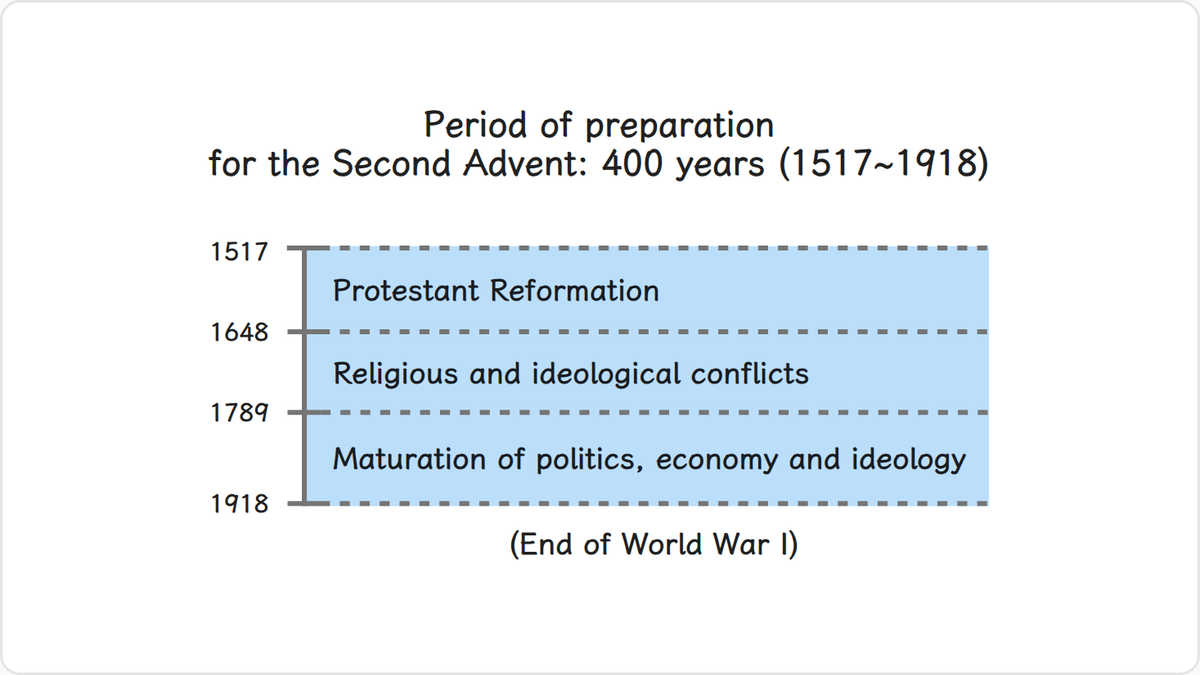
- The period of preparation for the Second Advent of the Messiah was the four-hundred-year period from the Protestant Reformation in 1517 to the end of World War I in 1918.
- With respect to the providence of restoration, this period is divided into three periods.
- The period of the Reformation, the period of religious and ideological conflicts, and the period of the maturation of politics, economy and ideology.
The Period of the Reformation (1517-1648)
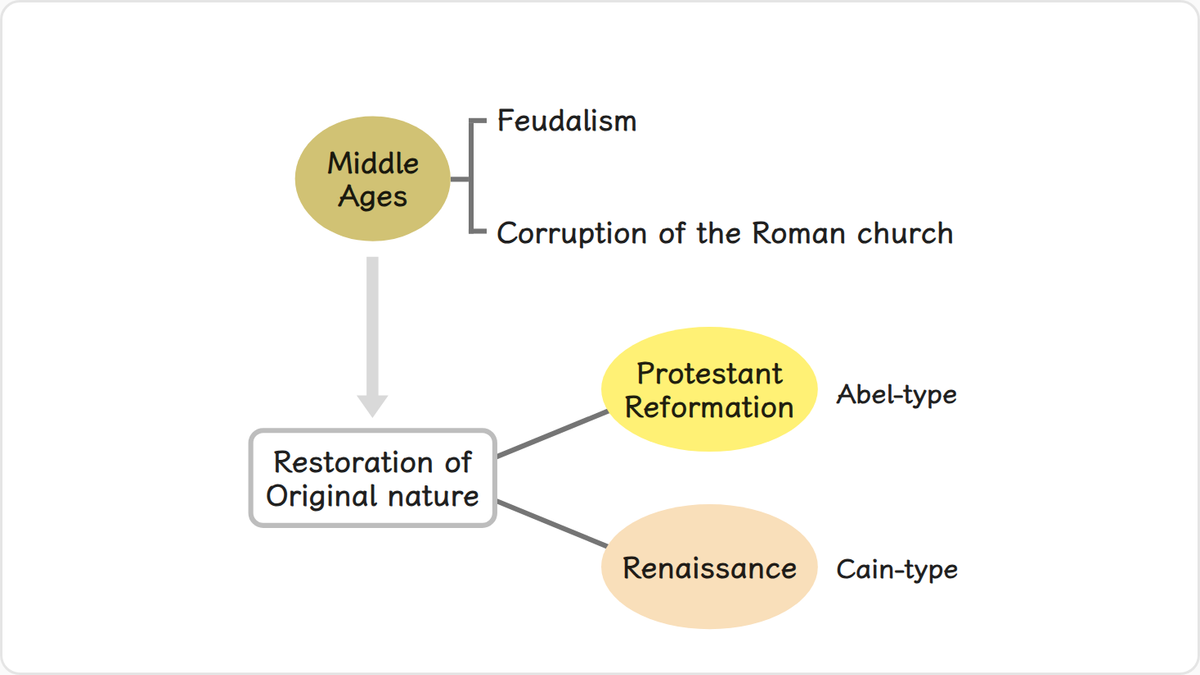
- In the late Middle Ages, man’s original mind was repressed, its free development blocked by the social environment of feudalism and the secularization and corruption of the Roman church.
- Medieval Europeans were prompted by the impulses of their innermost hearts to break down their social environment to open the way for the restoration of their original nature.
- The Cain-type movement began as a revival of Hellenism. It gave rise to the Renaissance, whose core value was humanism.
- The Abel-type movement began as a revival of the Hebraic heritage of Israel and the early Christian Church. It gave rise to the Protestant Reformation, whose core value was faith in God.

- The Renaissance grew out of the external pursuits of the original nature.
- These pursuits led to a movement to revive the ancient heritage of Hellenism.
- Renaissance humanism thus rose to prominence.
- The Renaissance came to life in fourteenth-century Italy.
- Though it began as a movement imitating the thought and life of ancient Greece and Rome, it soon developed into a wider movement which transformed every aspect of society, including politics, economic life and religion.
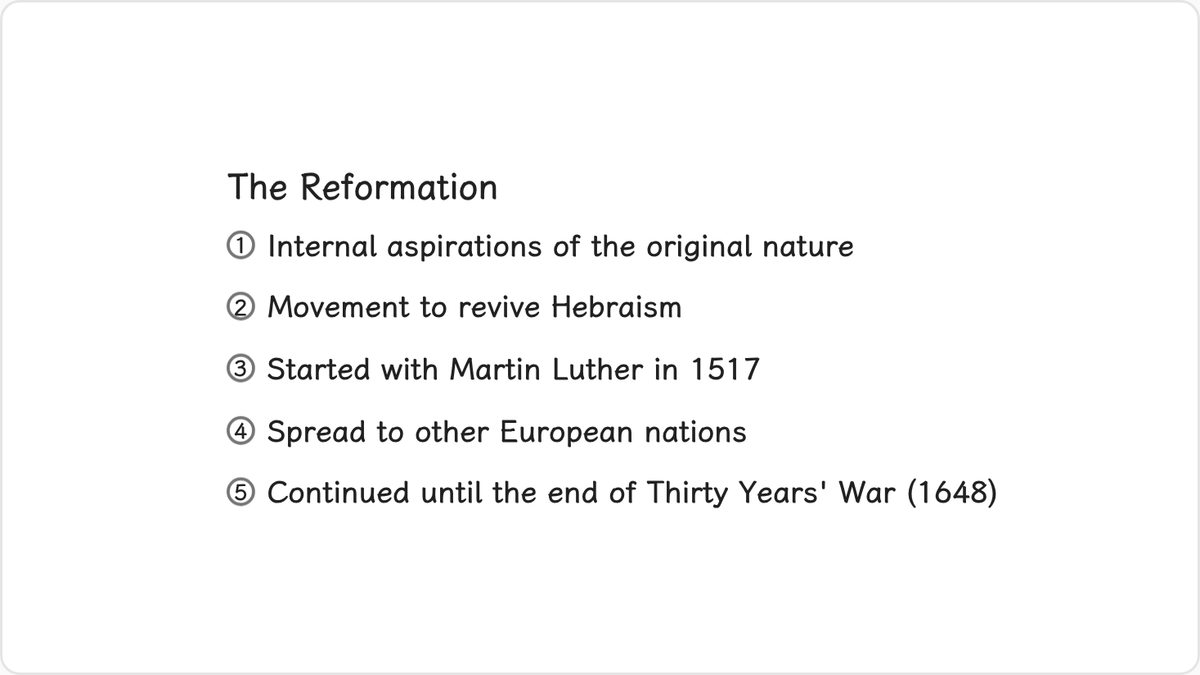
- As medieval Europeans sought to realize the external aspirations of their original nature, they also began to pursue its repressed internal aspirations.
- They called for the revival of the spirit of early Christianity, leading to a movement to revive Hebraism.
- When the pope began selling indulgences in 1517, a movement to protest this abuse ignited a fuse which exploded in the Protestant Reformation under the leadership of Martin Luther.
- The flames of the Reformation grew strong and soon spread to Switzerland under the leadership of Huldrych Zwingli, to France as led by John Calvin, and into such nations as England and the Netherlands.
- The wars of religion which swirled around the Protestant movements continued until 1648, when the Treaty of Westphalia ended the Thirty Years’ War.
The Period of Religious and Ideological Conflicts (1648-1789)
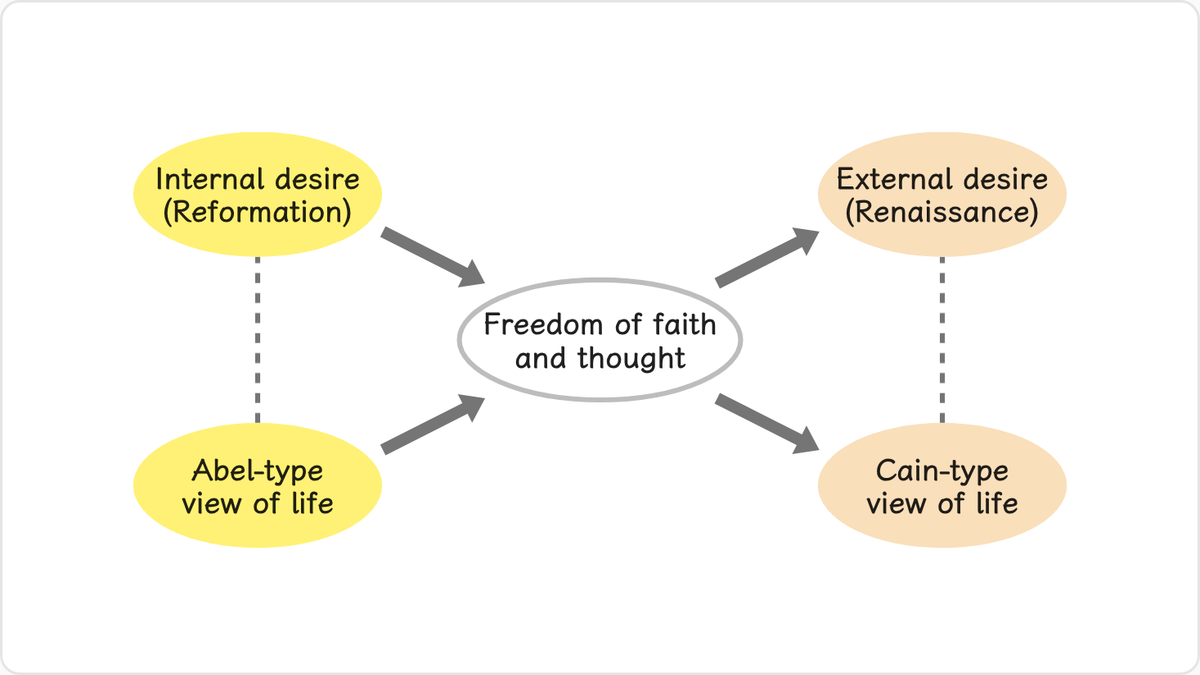
- As modern people continued to pursue the internal and external desires of their original nature, they could not avoid divisions in theology and disputes among philosophies arising from freedom of faith and thought.
- The Cain-type and Abel-type views of life developed in this period.
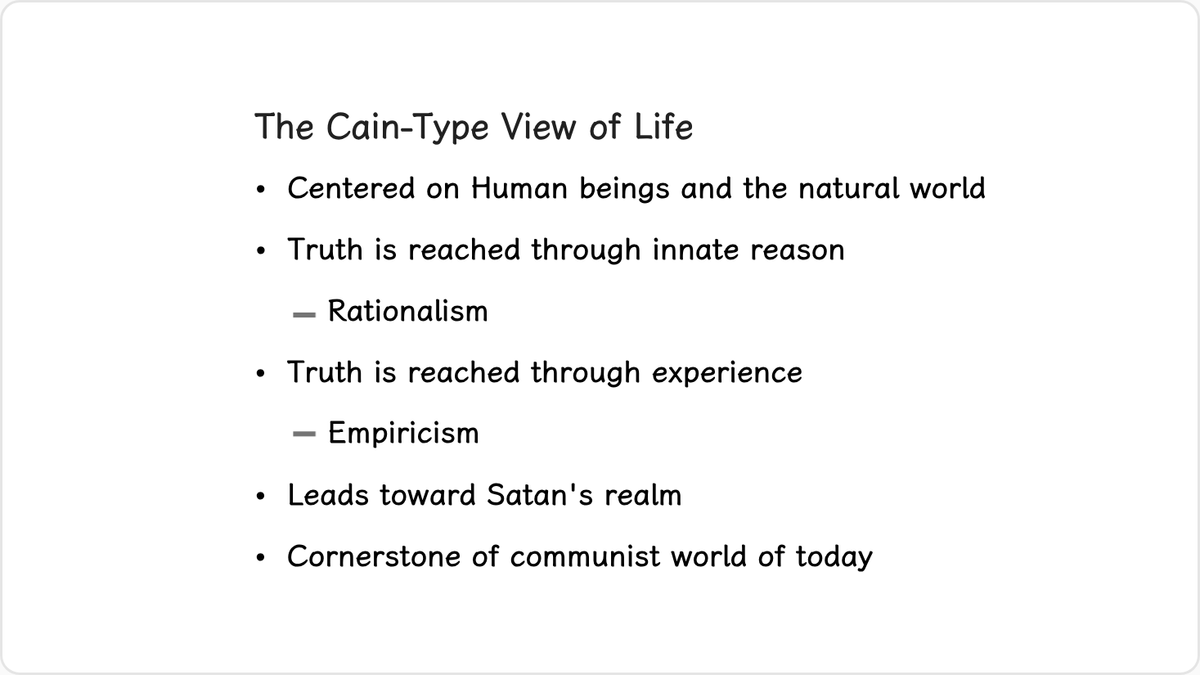
- The Renaissance established a new perspective on life, one which exalted the value of human beings and nature and sought to understand them through reason and experience, logic and experiment.
- It gave birth to a view of life which encouraged people to follow only external pursuits. This blocked their path to God and led them toward Satan’s realm.
- For this reason, it is called the Cain-type view of life.
- The Cain-type view of life grew through the Enlightenment and matured into Marxism, which became the cornerstone of the communist world of today.
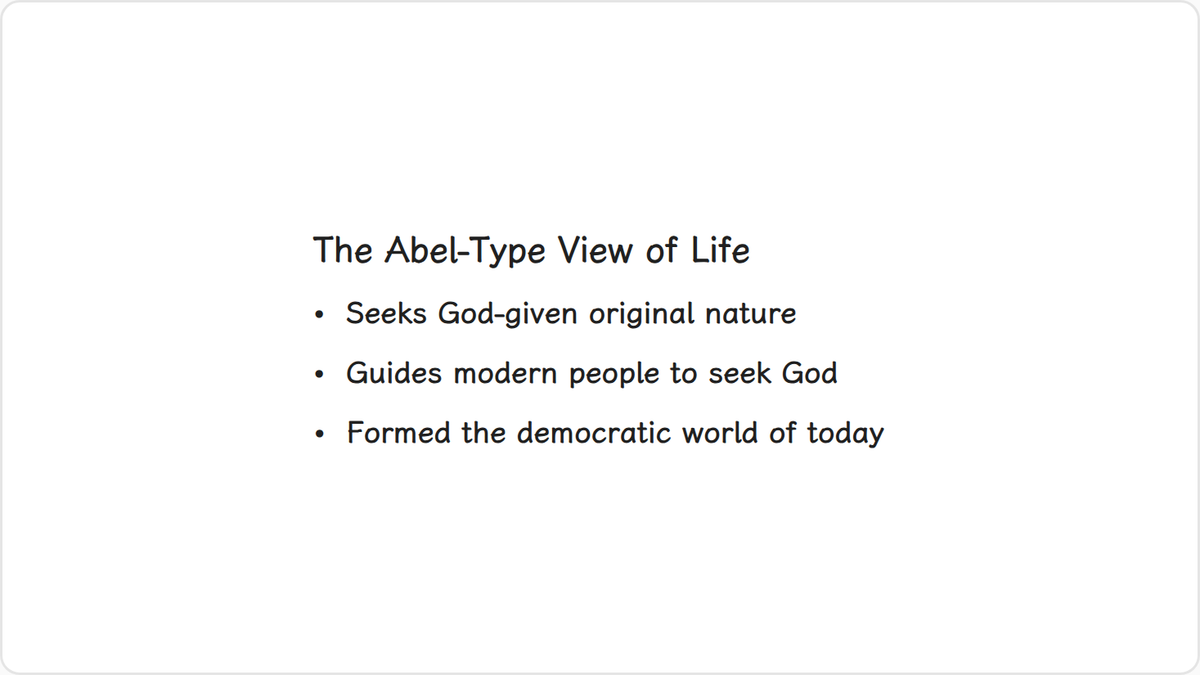
- The Reformation spawned philosophies and religious teachings which developed a multi-dimensional view of life seeking to realize the God-given, original nature of human beings.
- This view of life guided modern people to seek God in a deeper and more thoughtful way. We call this the Abel-type view of life.
- In diverse ways, the Abel-type view of life was maturing to form the democratic world of today.
The Period of Maturation of Politics, Economy and Ideology (1789-1918)
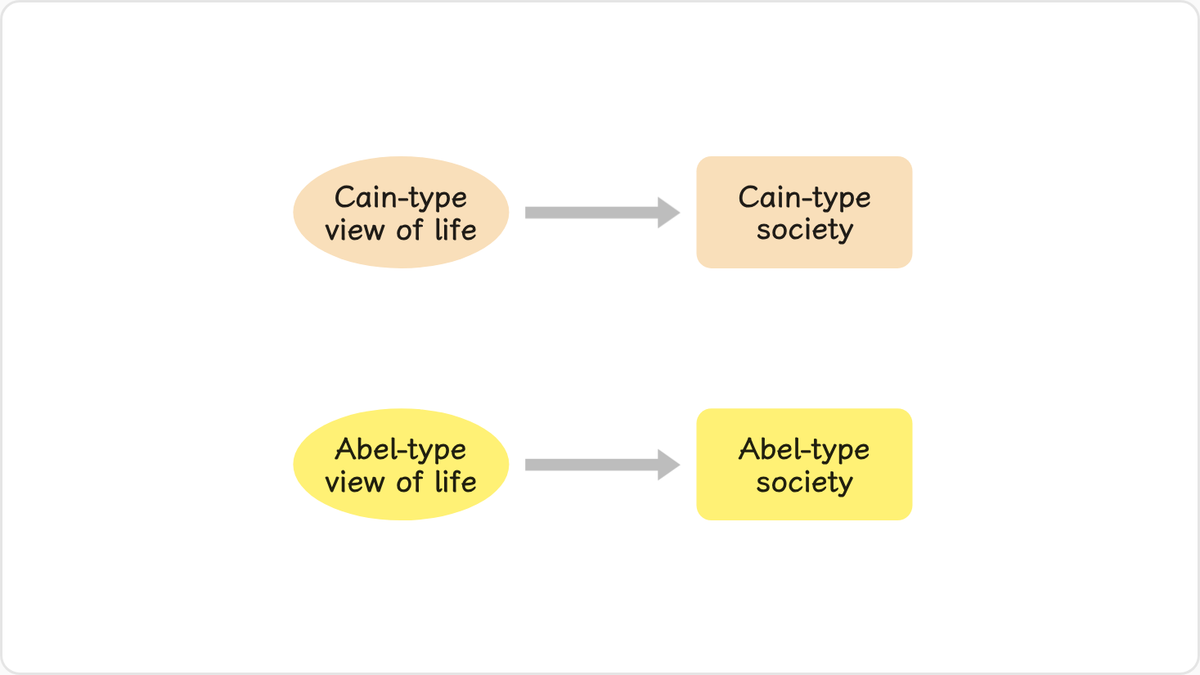
- Cain-type and Abel-type views of life matured, taking their separate paths.
- As they matured, they founded two different forms of society with distinct social structures: a Cain-type society and an Abel-type society.
- The period of the maturation of politics, economy and ideology refers to the 130 years between the French Revolution in 1789 and the end of the First World War in 1918.
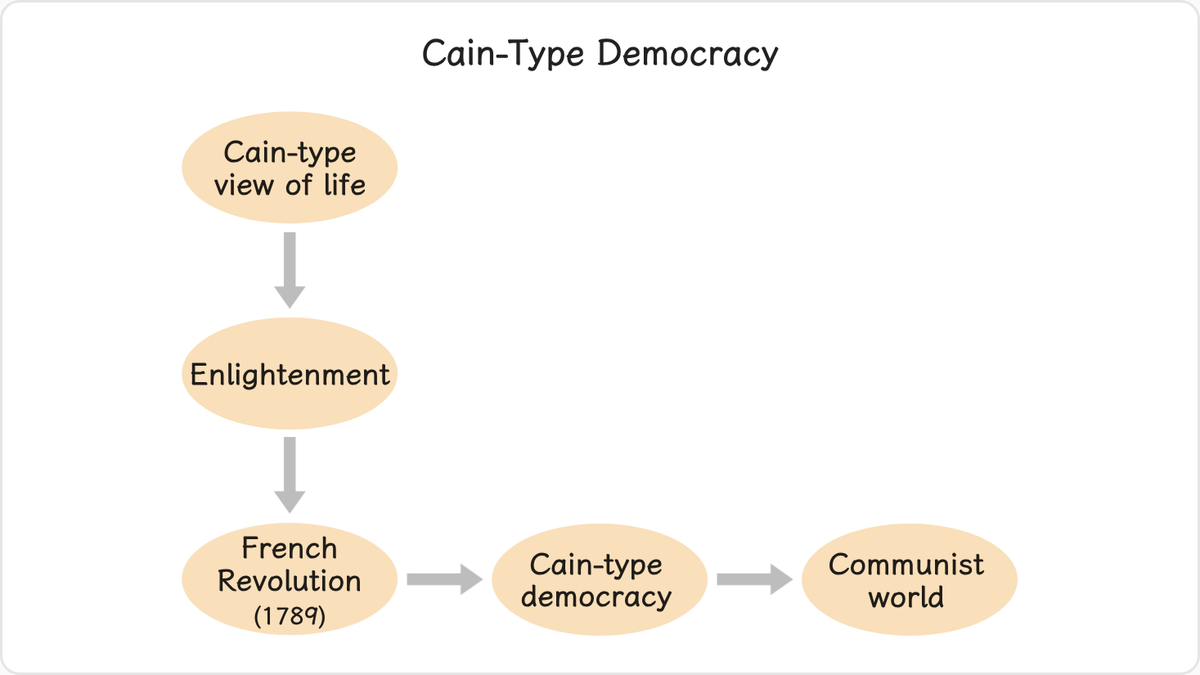
- In this way, those espousing the Cain-type view of life championed the Enlightenment
- and gave rise to the French Revolution, thus establishing Cain-type democracy.
- It would later be systematized into Marxism in Germany and Leninism in Russia, eventually forming the communist world.
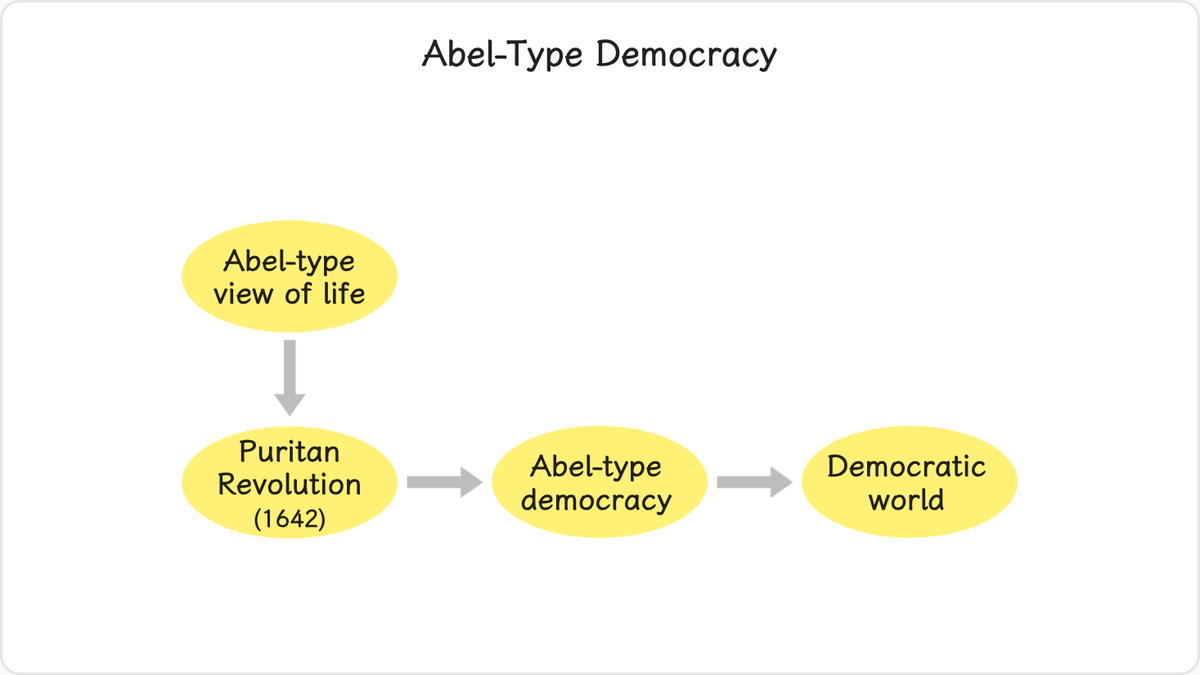
- Sincere Christians, the fruits of the Abel-type view of life, founded Abel-type democracies through their victorious fight with absolutism to win religious freedom.
- Many Puritans emigrated to the American continent to obtain religious freedom.
- They founded an independent nation in 1776 and established American democracy.
- Abel-type democracy has developed from these beginnings into the democratic world of today.
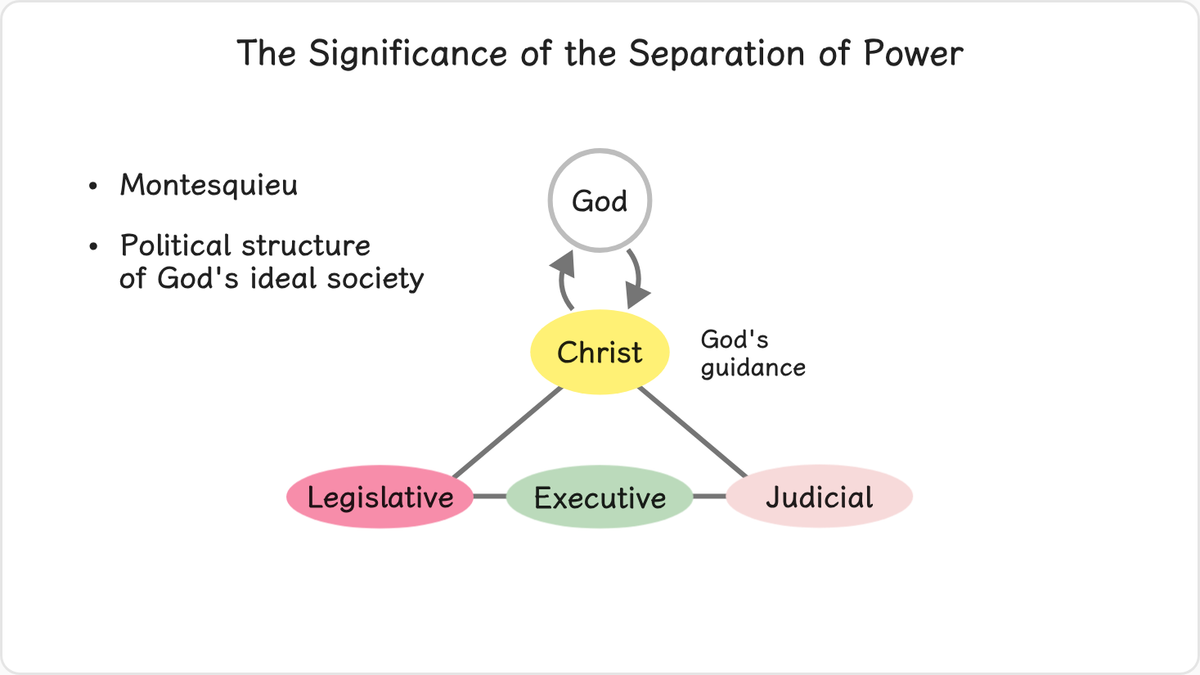
- The concept of the separation of powers into three branches of government was advocated by Montesquieu.
- It sought to prevent the concentration of political power in the hands of a single individual or institution, as was the case with political absolutism.
- The idea was proclaimed in the Declaration of the Rights of Man during the French Revolution.
- From the beginning, the separation of powers was to be characteristic of the political structure of the ideal society.
- Yet here again, as we observe throughout the course of the providence, Satan was defectively mimicking an aspect of the Principle ahead of its realization by God.
- Hence, the three branches of government—the legislative, judicial and executive branches—should interact in harmonious and principled relationships by following God's guidance as conveyed through Christ.
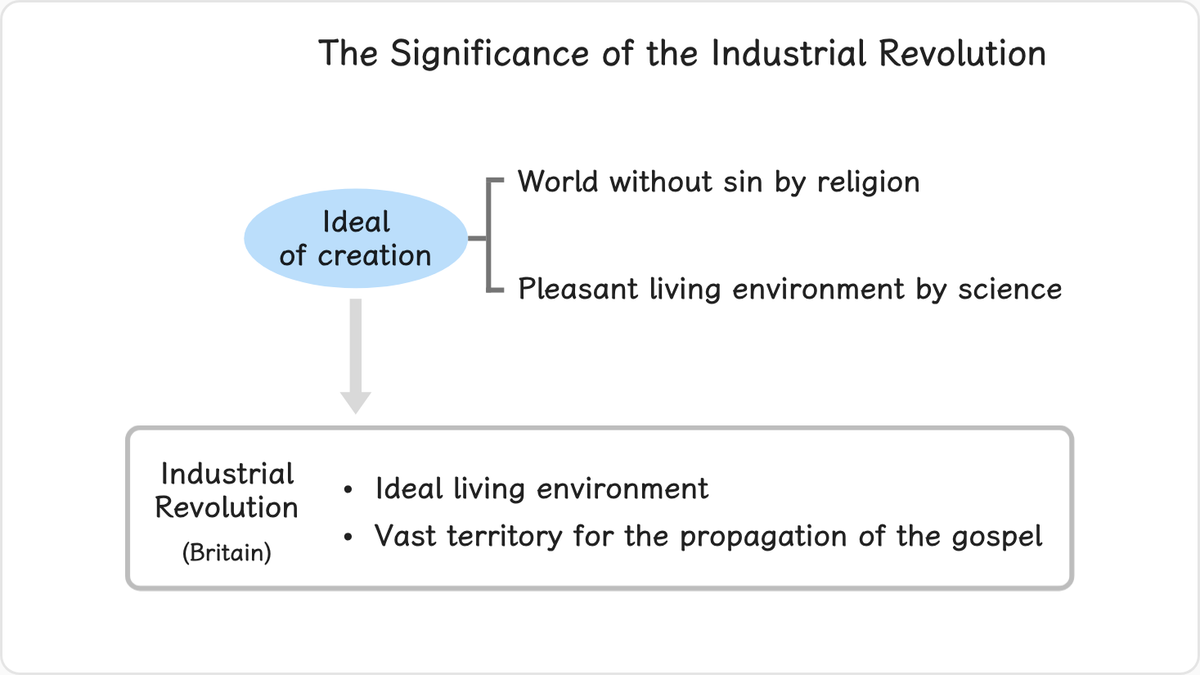
- God’s ideal of creation cannot be fulfilled merely by forming a world without sin.
- God blessed human beings to have dominion over the universe.
- We are to advance science and technology to create a pleasant living environment.
- The Industrial Revolution arose out of God’s providence to restore the living environment to one suitable for the ideal world.
- The Industrial Revolution opened up a vast territory for the propagation of the Gospel.
- Accordingly, it contributed to both the internal and external aspects of the providence of restoration.
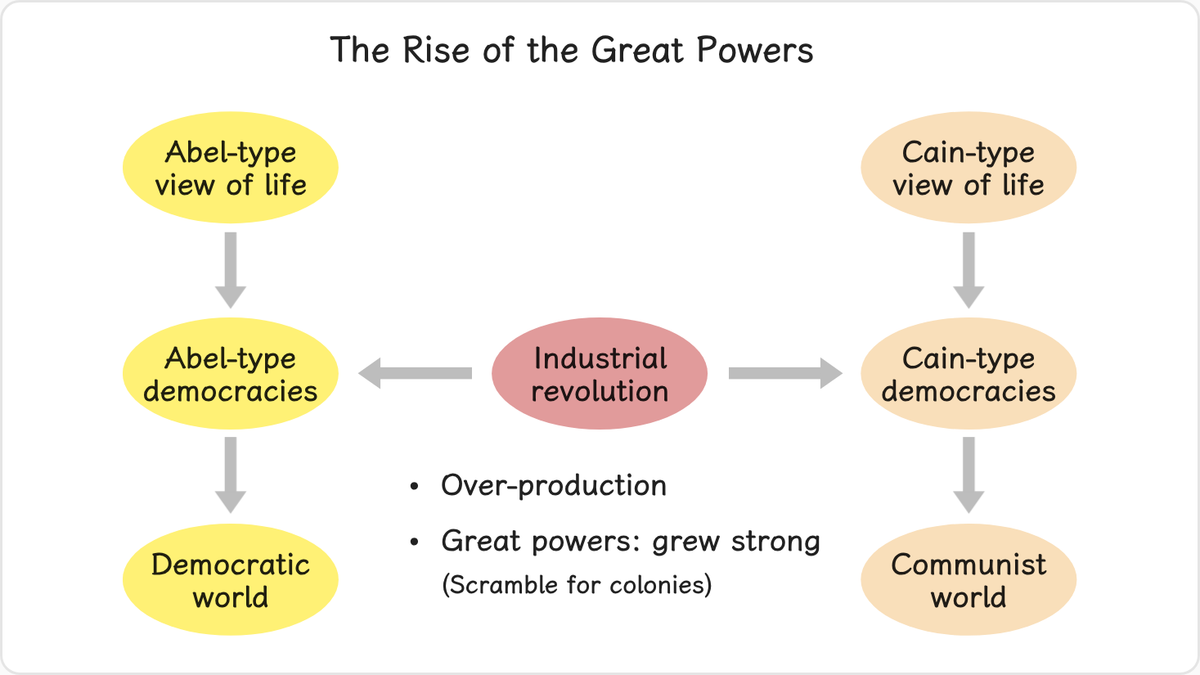
- After the Renaissance, the unitary worldview of medieval Europe was divided into Cain- and Abel-type views of life,
- which founded two types of democracies.
- Greatly strengthened as a result of the Industrial Revolution, the two types of democracies were on the course to form the democratic and the communist worlds.
- Following the Industrial Revolution, spurred by the rapid progress of science, industrialization created economies characterized by over-production.
- The great powers of Europe grew strong as they competed with each other in the scramble for colonies.
- Thus, the two trends in ideology and the course of economic development divided the world into the democratic and the communist worlds.
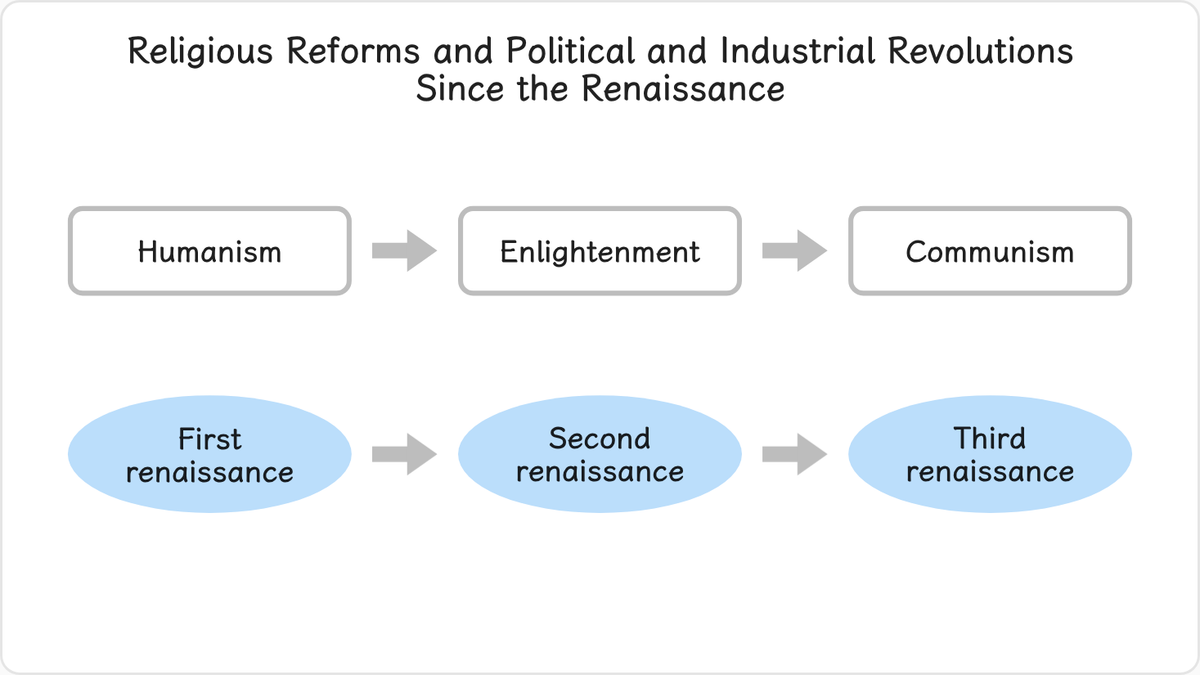
- The Cain-type movement which began with the revival of Hellenism overthrew the medieval world and gave birth to the humanism of the Renaissance.
- As this movement developed further, moving in Satan’s direction, it gave birth to the Enlightenment, which may be regarded as the second renaissance in the current of ideology.
- Enlightenment thought further matured in the satanic direction, giving birth to historical materialism, which is the core of communist ideology. This may be regarded as the third renaissance.
- Since the satanic side mimics in advance the providence of God, we may expect that God’s providence calls for three stages of revolution to take place in each of the three spheres of religion, politics and economy.
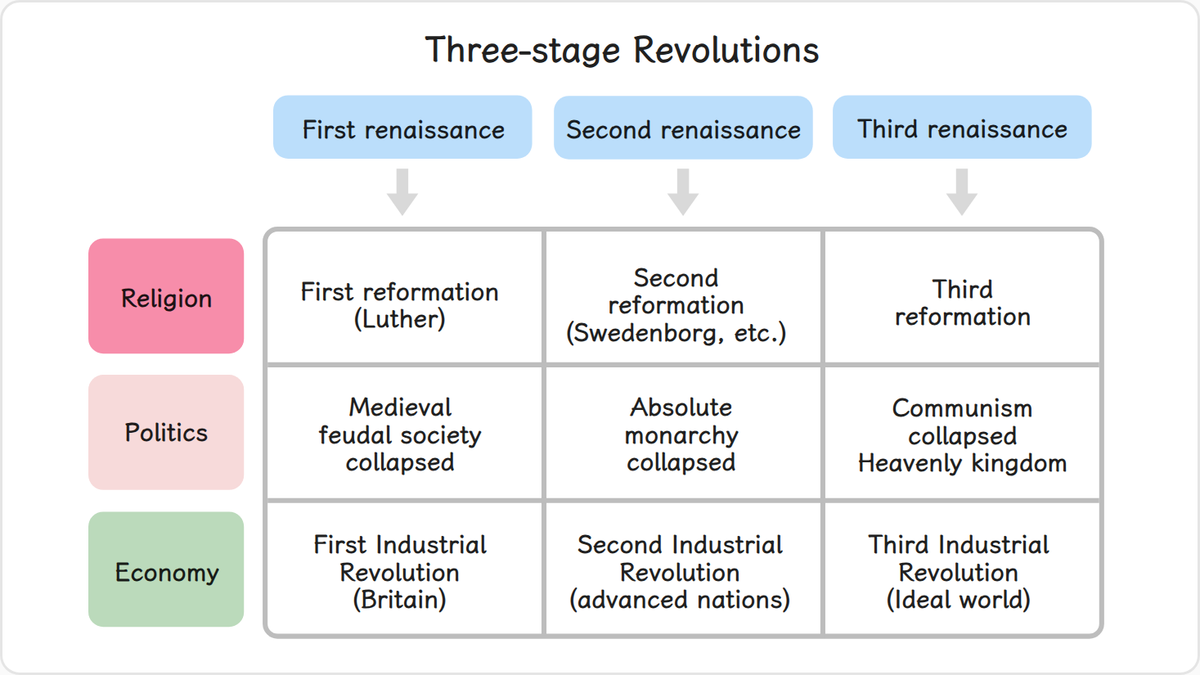
- In the sphere of religion, it is evident that a third religious reformation will occur following the first and second reformations.
- In the political sphere, medieval feudal society and then absolute monarchy collapsed under the weight of the first and second renaissances and reformations respectively.
- Through the coming third religious reformation, the democratic world will triumph and bring the communist world, established through the third renaissance, to its knees.
- Then the two worlds will unite into one Kingdom of Heaven on earth under God.
- The third Industrial Revolution, following the first and second, will construct a pleasant living environment for the ideal world.
The World Wars
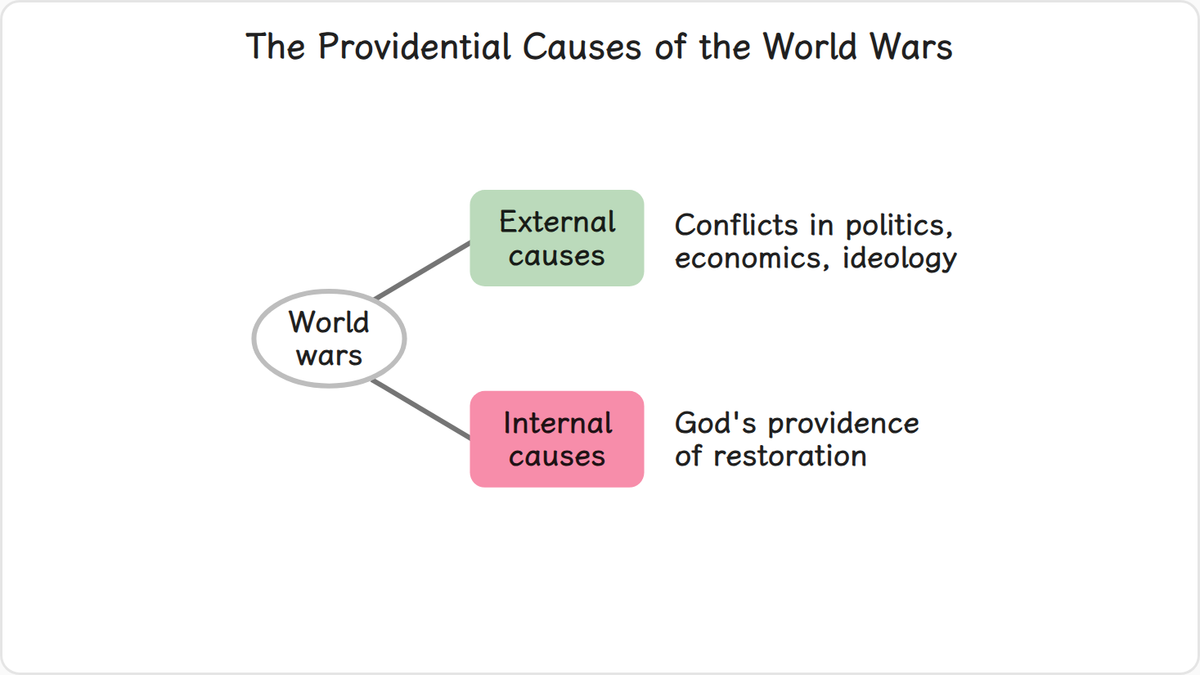
- Wars break out due to such factors as conflicts of political and economic interests and clashes of ideology. Yet these are merely external causes.
- There are also internal causes of wars.
- Accordingly, we cannot grasp the providential significance of the world wars by focusing only on external causes.
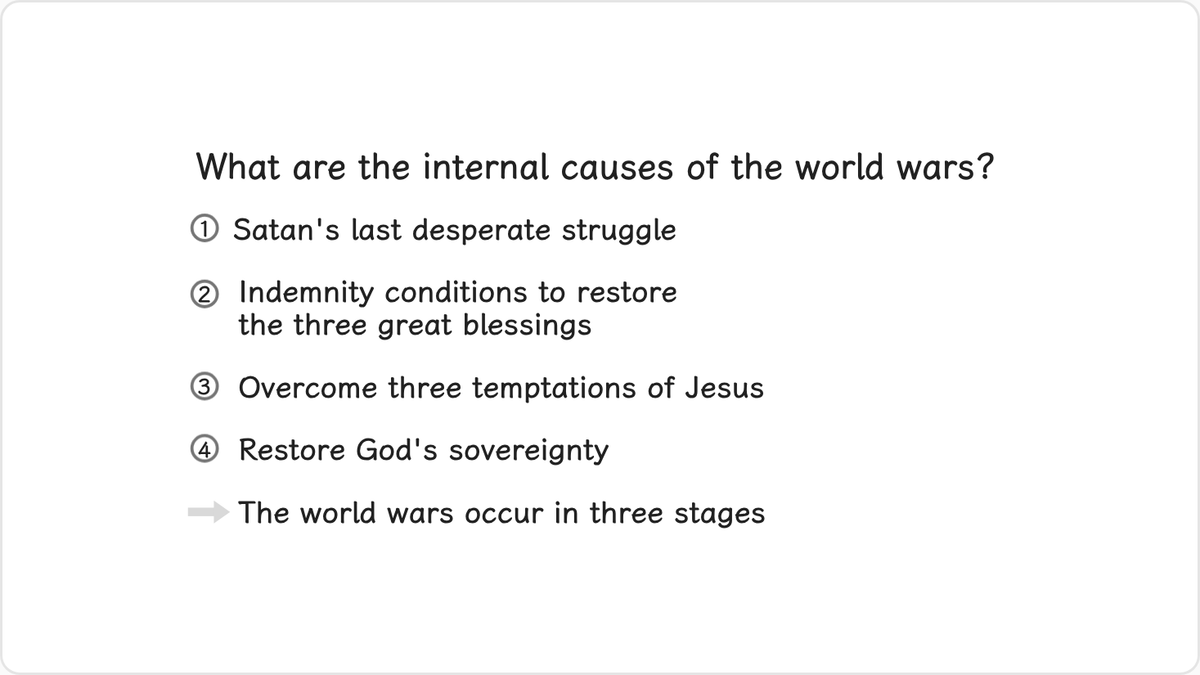
- What are the internal, providential causes of the world wars?
- The world wars have occurred as a result of Satan's last desperate struggle to preserve his sovereignty.
- In order to fulfill the worldwide indemnity conditions to restore the three great blessings.
- In order that all humanity may overcome on the world level the three temptations by which Satan tempted Jesus.
- In order to fulfill the worldwide indemnity condition to restore God's sovereignty.
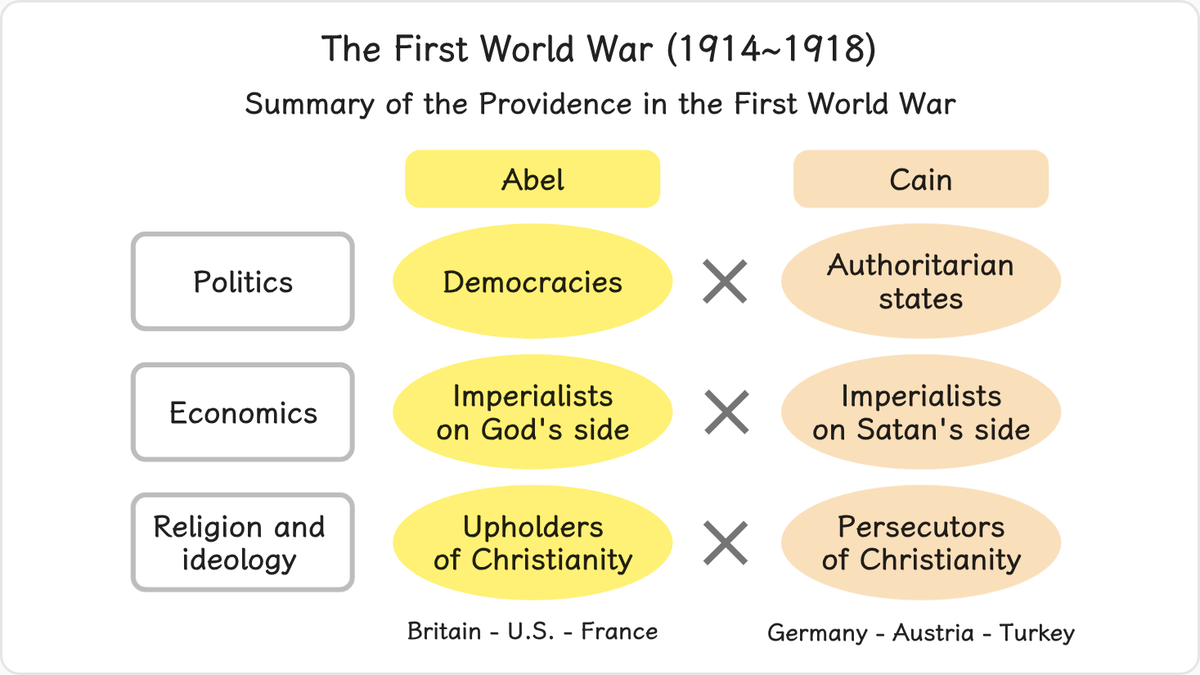
- In the political sphere, the First World War was a conflict between Abel-type democracies and Cain-type authoritarian states.
- In the economic sphere, it was fought between the imperialist nations on God's side and the imperialist nations on Satan’s side.
- In the sphere of religion and ideology, the Abel-type nations of Great Britain, the United States, and France, which generally upheld Christianity, fought the Cain-type nation of Turkey, which persecuted Christianity, and its allies, Germany and Austria-Hungary.
- At the conclusion of the First World War, the Abel-type democracies had gained victory at the formation stage.
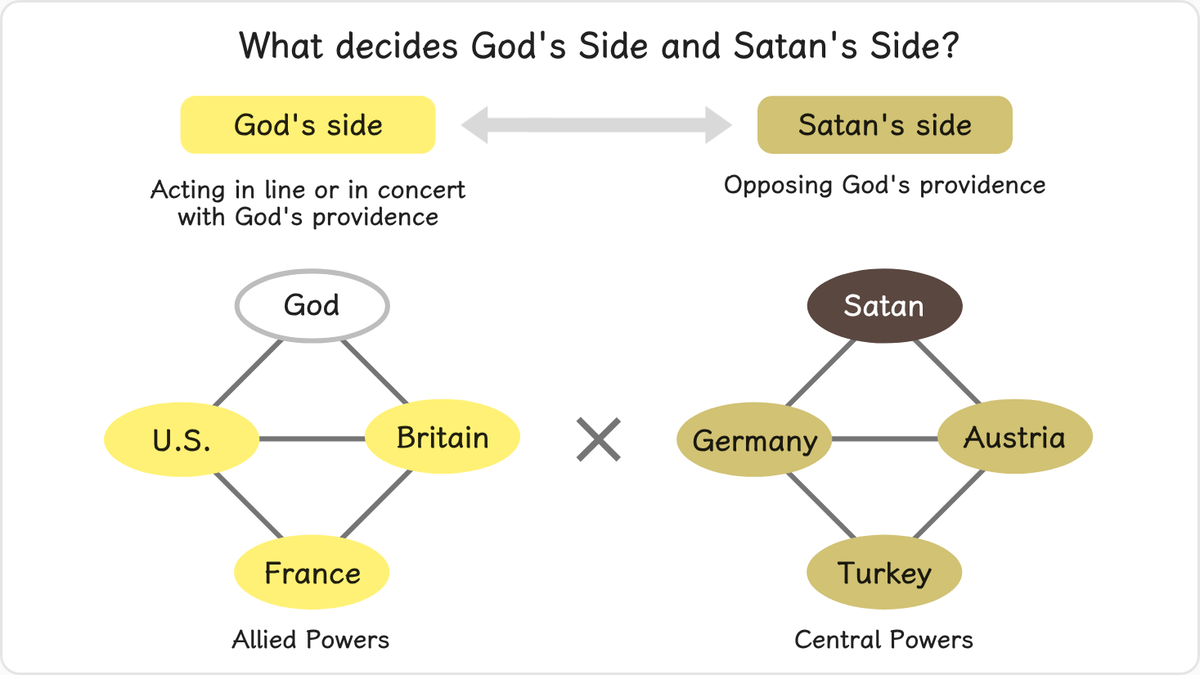
- Those acting in line or in concert with the direction of God's providence are on the side of God, while those taking an opposing position are on the side of Satan.
- In the First World War, the Allied Powers led by Great Britain, the United States, and France stood on God's side.
- On the other hand, Germany and Austria-Hungary, the leading Central Powers, supported Turkey, a Muslim nation which persecuted Christianity. Therefore, together with Turkey, they stood on Satan's side.
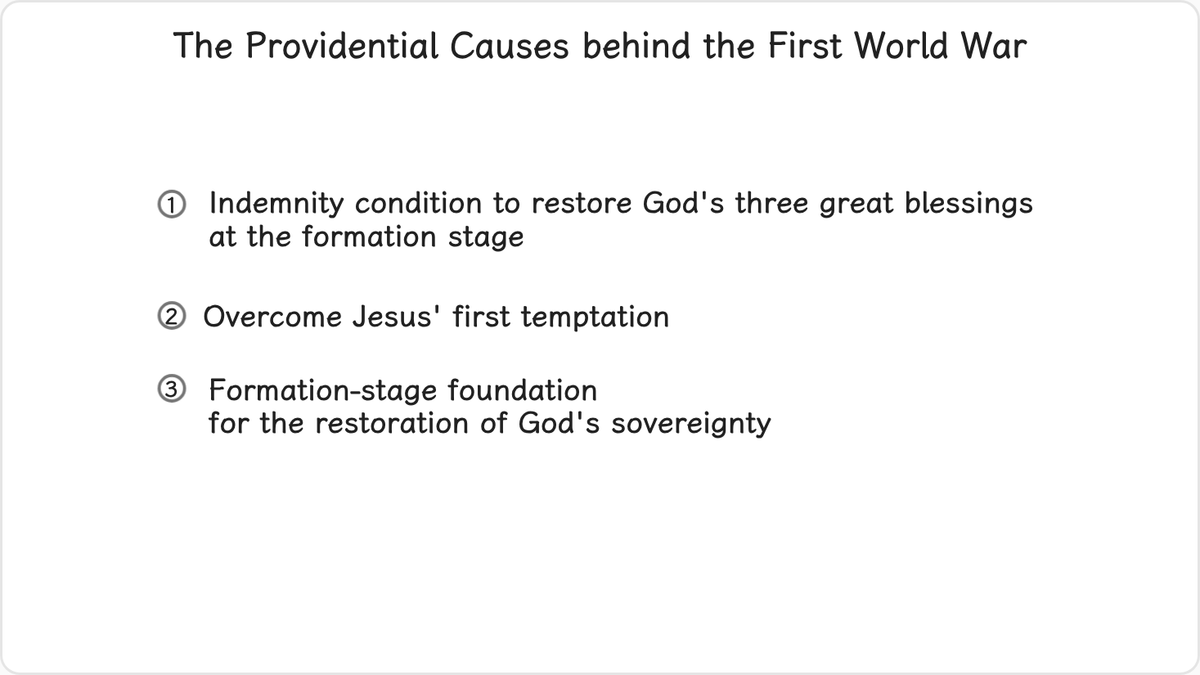
- The First World War had to take place in order to:
- Fulfill the worldwide indemnity condition to restore God's three great blessings at the formation stage.
- Have people on God's side collectively overcome Jesus' first temptation on the world level.
- Lay the formation-stage foundation for the restoration of God's sovereignty.
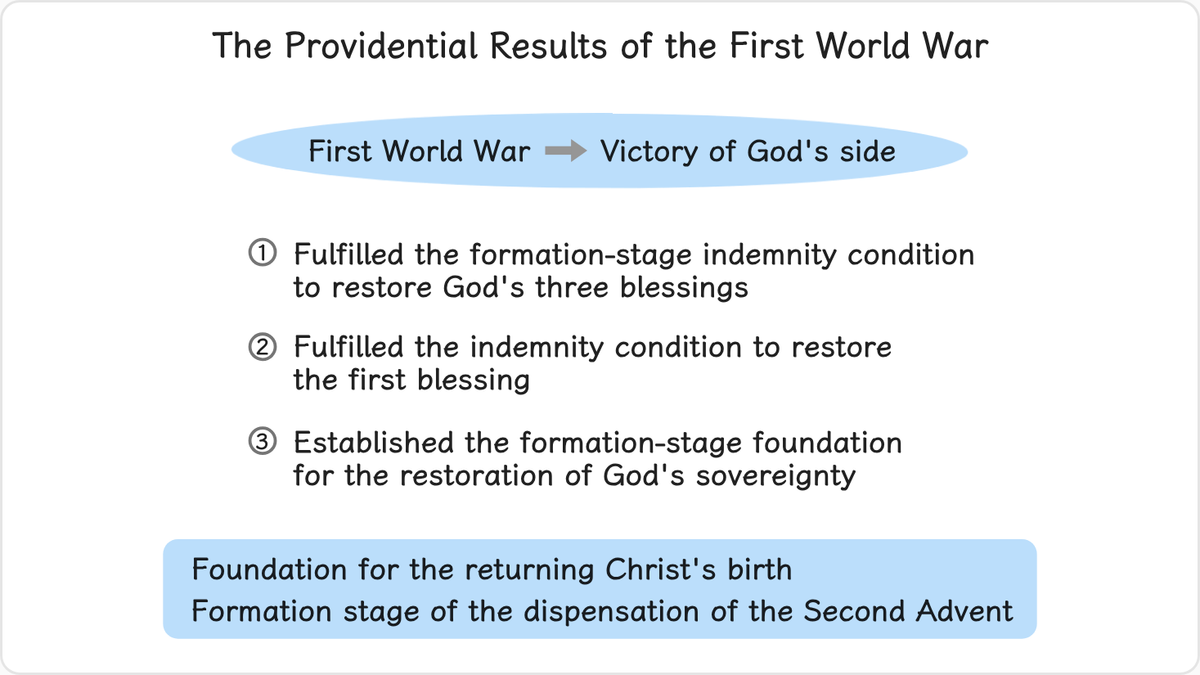
- The victory of God's side in the First World War:
- Fulfilled the formation-stage indemnity condition to restore God's three great blessings worldwide.
- Fulfilled the indemnity condition to restore God's first blessing worldwide.
- Established, through the victory of democracy, the formation-stage foundation for the restoration of God's sovereignty.
- This laid the foundation for the birth of the returning Christ, and the formation stage of the dispensation of the Second Advent commenced.
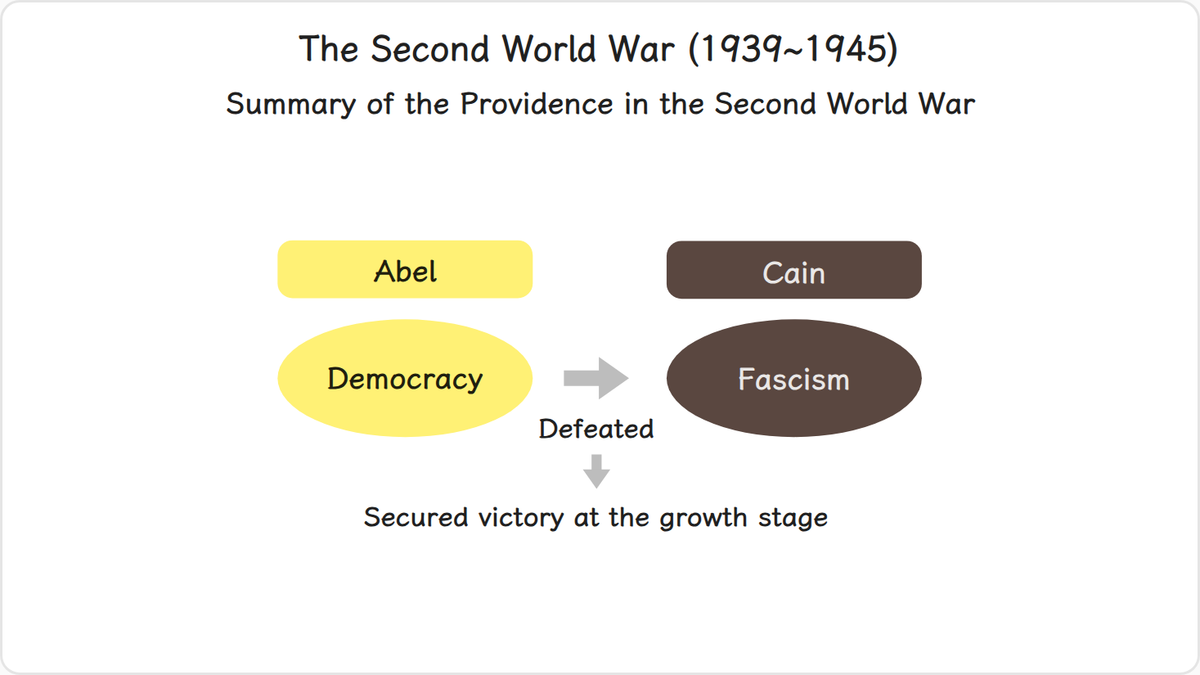
- The spiritual origin of modern democracy lies in the people’s striving to realize the values of the Abel-type view of life.
- Democracy follows the internal and external aspirations of the original human nature and will certainly develop in the direction of God’s ideal world.
- Fascism, on the other hand, constrains people from following the aspirations of their original nature.
- In the Second World War, democracy, while standing upon the formation-stage victory attained in the First World War, defeated fascism and secured victory at the growth stage.
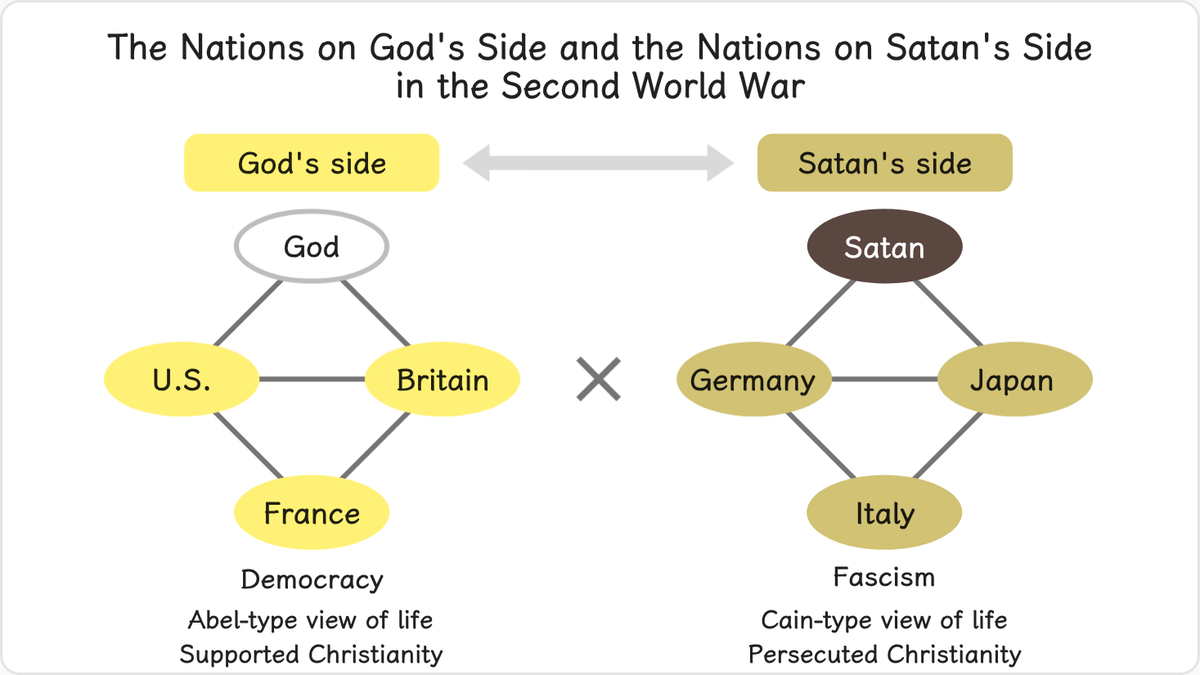
- In the Second World War, an alliance of the democratic nations of the United States, Great Britain and France led the nations on God’s side.
- Satan’s side was the alliance of the fascist nations: Germany, Japan and Italy.
- The Allies stood on God’s side because their political systems were democracies, the political system for the final stage in the providence of restoration founded upon the Abel-type view of life.
- The Axis Powers, on the other hand, stood on Satan’s side because they upheld fascism, which was anti-democratic and stemmed from the Cain-type view of life.
- Moreover, the Allies and Axis Powers were separated into God’s side and Satan’s side because the former nations supported Christianity while the latter opposed and persecuted Christianity.
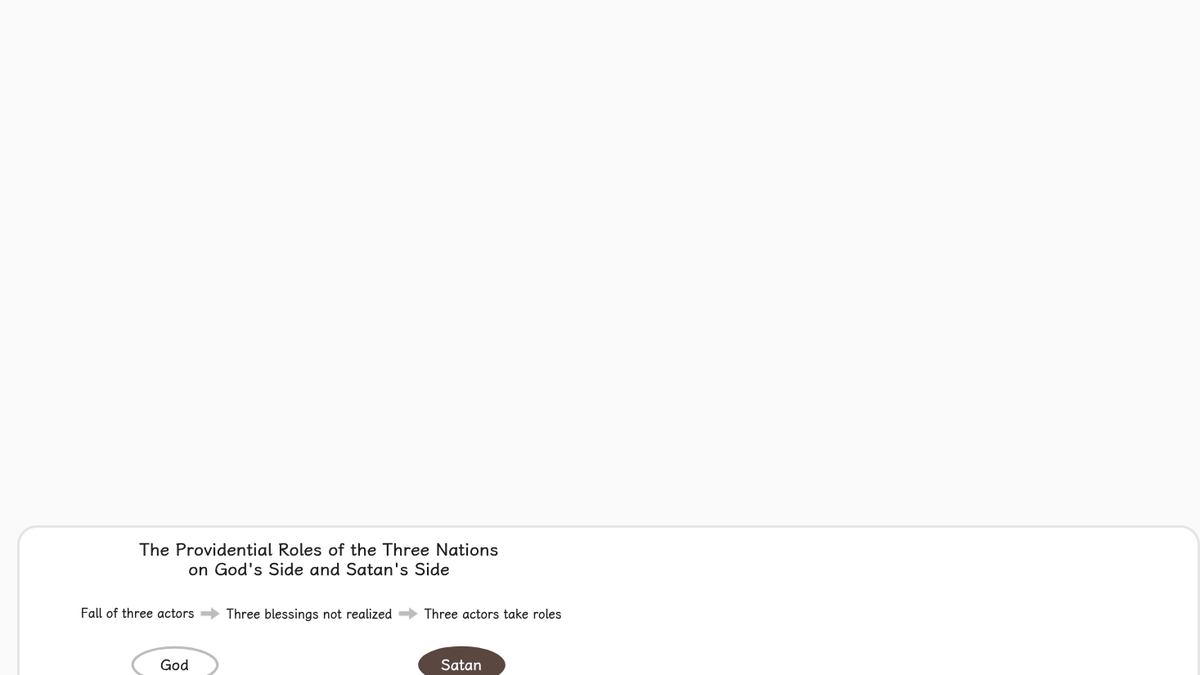
- In the beginning, it was due to the Fall of Adam, Eve and the Archangel that God’s three great blessings were not realized.
- Therefore, in the restoration of the three blessings, there necessarily have to be three actors taking these respective roles.
- Accordingly, during the Second World War, the three nations on God’s side representing Adam, Eve and the Archangel led the fight against the three nations on Satan’s side, which also represented Adam, Eve and the Archangel.
- The victory of the nations on God’s side would make a growth-stage indemnity condition for the restoration of the three great blessings.
- The United States, Great Britain, and France represented Adam, Eve, and the Archangel on God's side,
- and Germany, Japan, and Italy represented Adam, Eve, and the Archangel on Satan's side.
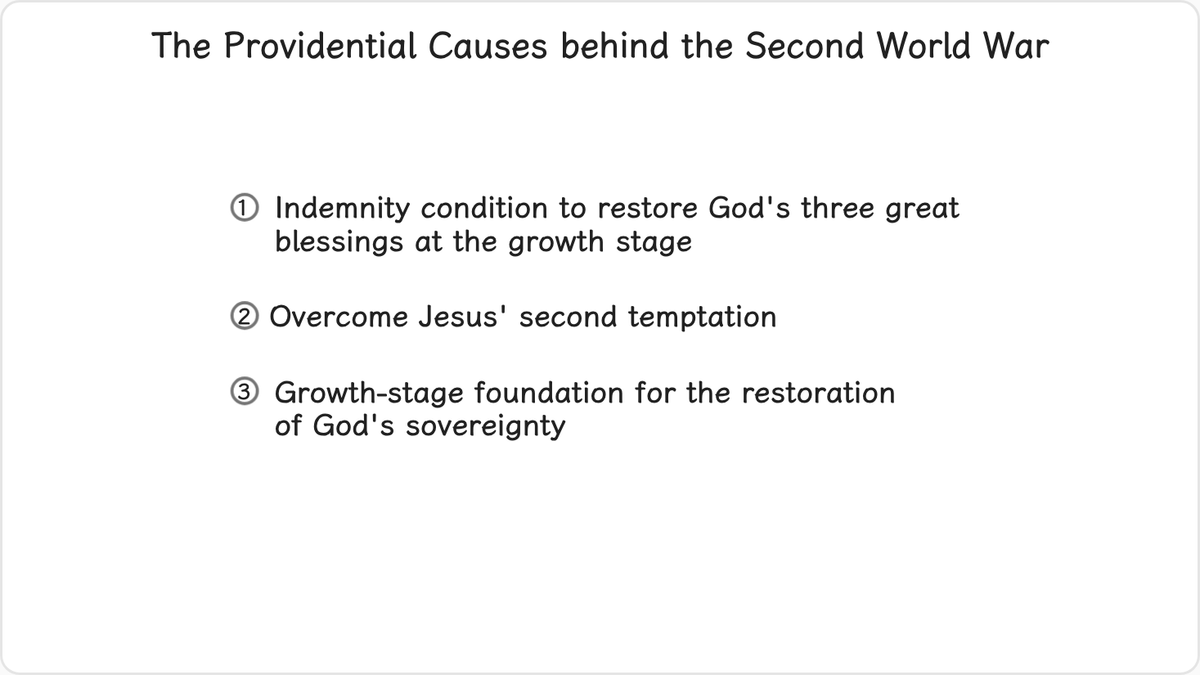
- The Second World War broke out in order to:
- Fulfill the worldwide indemnity condition to restore God's three great blessings at the growth stage.
- Have the people on God's side overcome Jesus' second temptation on the world level.
- Lay the growth-stage foundation for the restoration of God's sovereignty.
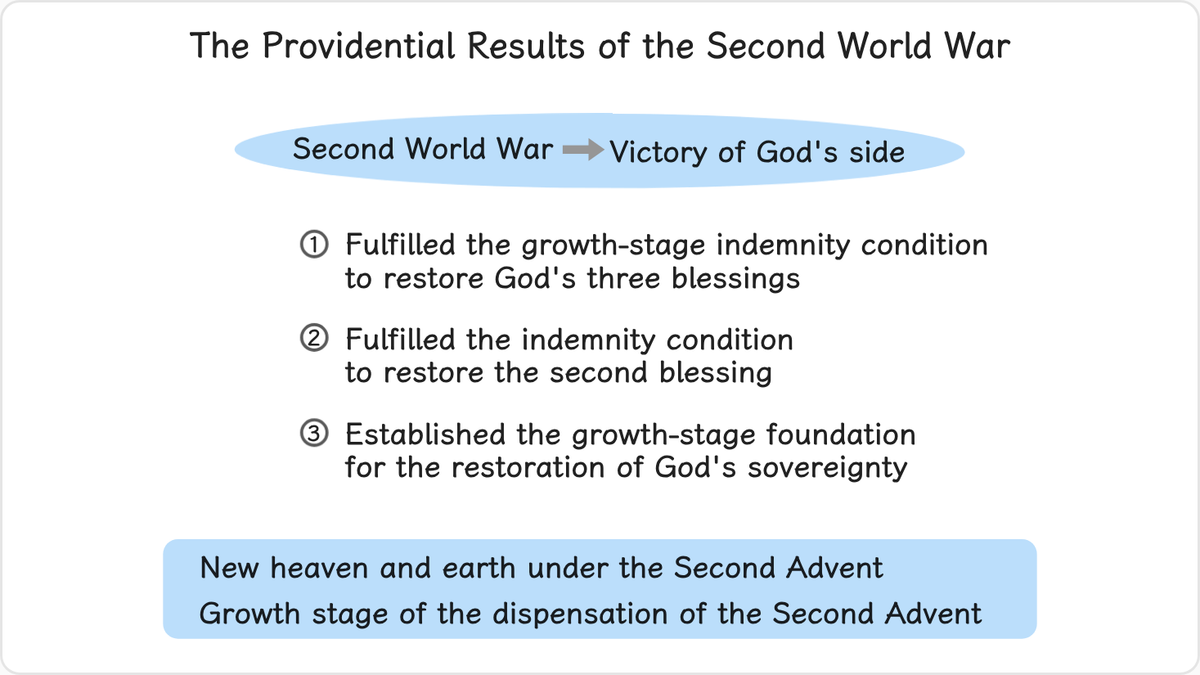
- The victory of God’s side in the Second World War:
- Fulfilled the growth-stage indemnity condition to restore God’s three great blessings worldwide.
- Fulfilled the indemnity condition to restore God’s second blessing worldwide.
- Established the growth-stage foundation to restore God’s sovereignty by laying the growth-stage foundation for the democratic world.
- The age for building a new heaven and new earth under the leadership of Christ at the Second Advent had begun,
- and the growth stage of the dispensation of the Second Advent commenced.
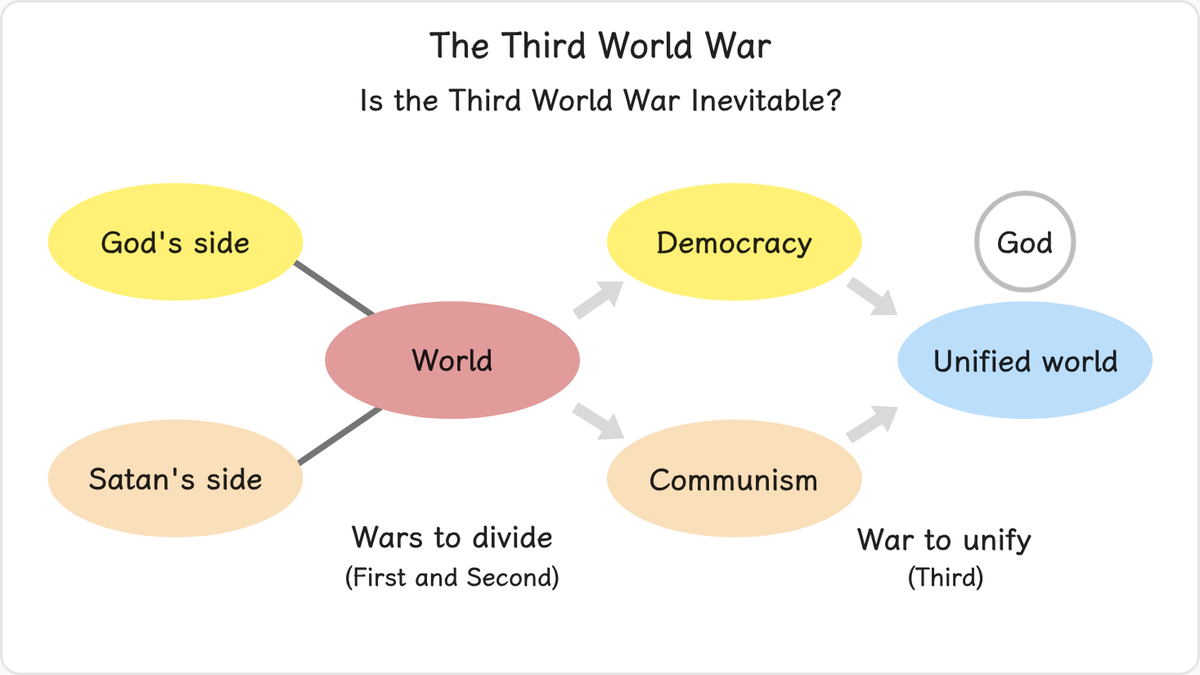
- At the consummation of human history, Satan’s side and God’s side will strive until they each attain sovereignty over a world.
- This is why the democratic world and the communist world stand confronting each other.
- Consequently, it became inevitable that there be world wars, first to divide and then to unify these two worlds.
- The First and Second World Wars had the providential purpose of dividing the globe into the communist world and the democratic world.
- Afterward, yet another war must take place to bring about their unification. This conflict is the Third World War.
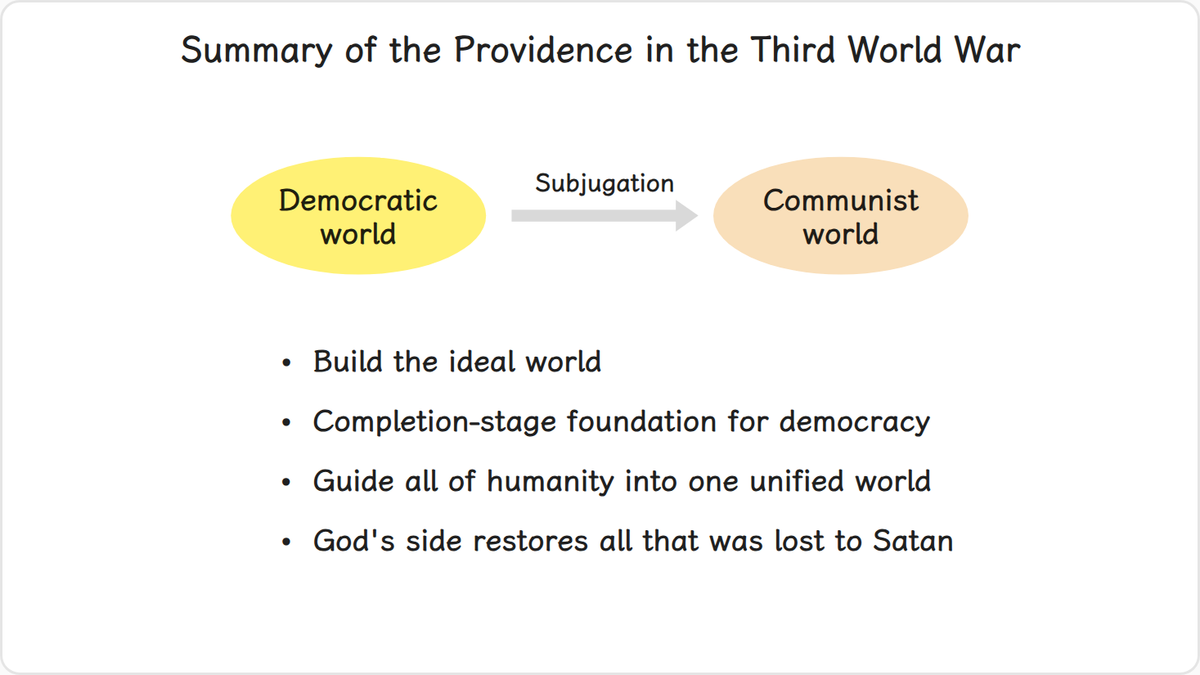
- Through the Third World War, God intends that the democratic world bring the communist world to submission and build the ideal world.
- During the Third World War, God’s side is to found the perfect Abel-type view of life based on the new truth and complete the worldwide completion-stage foundation for democracy.
- God’s side is then to guide all of humanity into one unified world.
- In summary, the Third World War is the last great war at the close of history, when God’s side restores horizontally through indemnity all that was lost to Satan throughout the three stages of the prolonged providence.
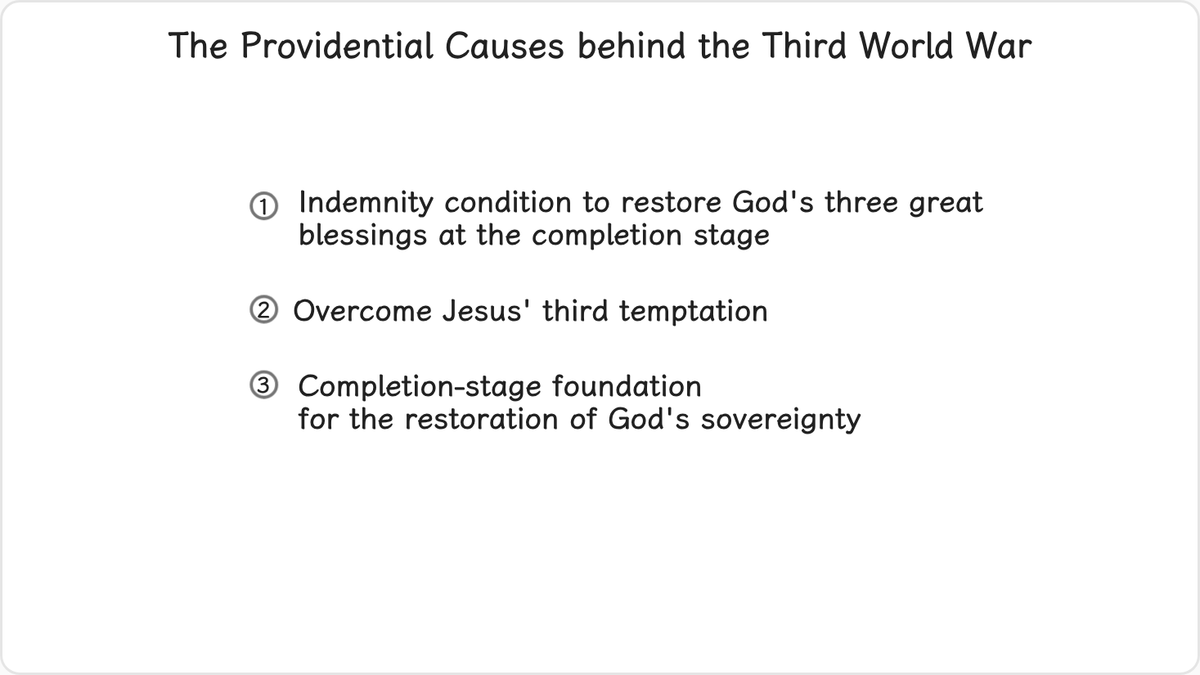
- The Third World War has to take place in order to:
- Fulfill the worldwide indemnity condition to restore God's three great blessings at the completion stage.
- Have the people on God's side overcome Jesus' third temptation on the world level.
- Lay the completion-stage foundation for the restoration of God's sovereignty.
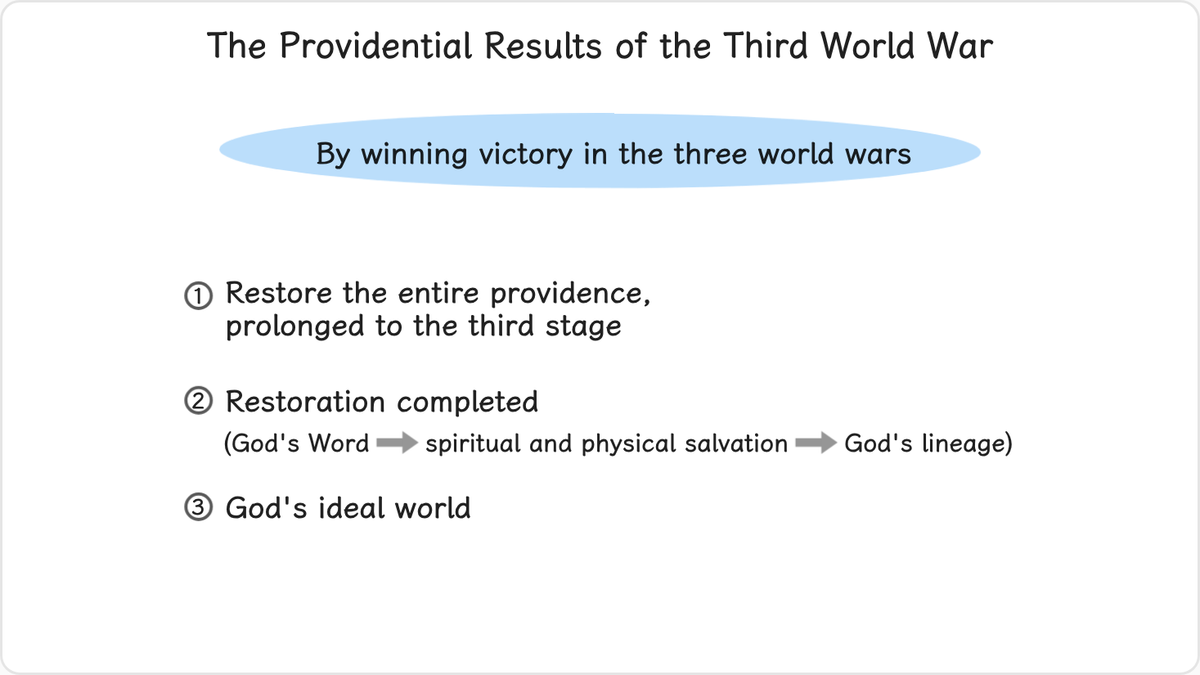
- By winning victory in the three world wars, which belong to the final chapter of providential history,
- God intends to restore through indemnity the entire providence, which was prolonged to the third stage.
- The providence of restoration can be completed only after fallen people restore their heart toward God through God's life-giving Word, are saved both spiritually and physically, and inherit God's lineage.
- The victories of God's side will fully restore through indemnity all the aspects of the providence of restoration and realize God's ideal world.