The Messiah: His Advent and the Purpose of His Second Coming
The Messiah: His Advent and the Purpose of His Second Coming
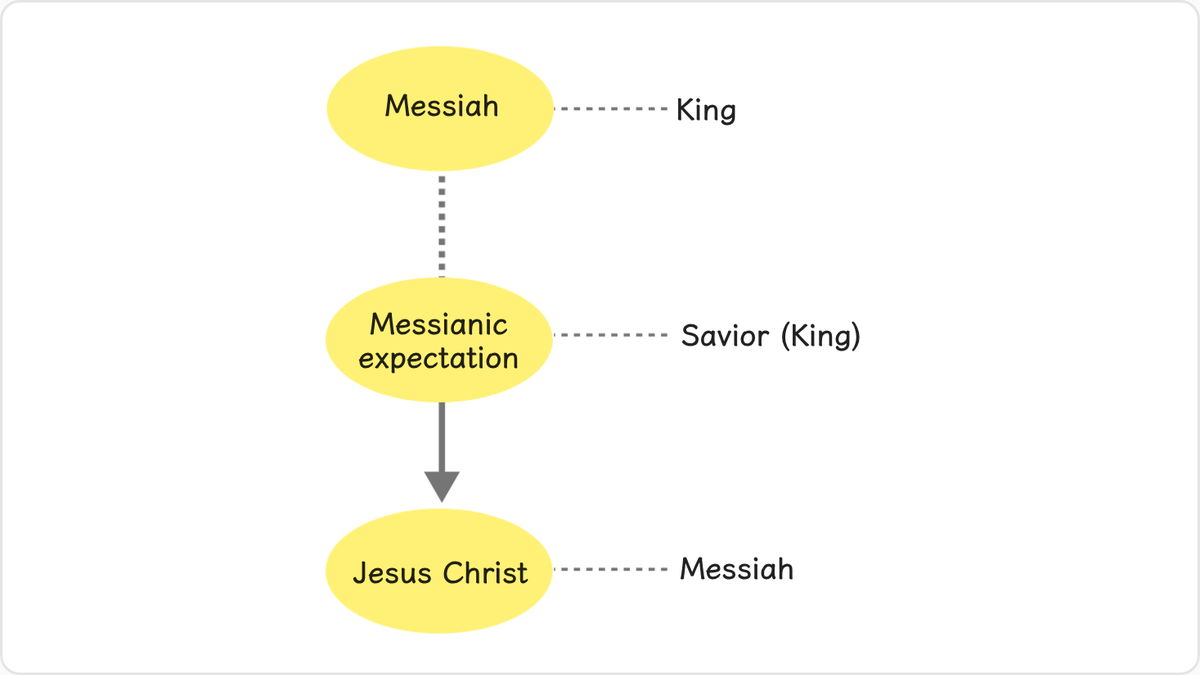
- The word “Messiah” in Hebrew means the “anointed one,” signifying a king.
- The chosen people of Israel believed in the Word of God as revealed through the prophets, which promised that God would send them a king and savior.
- Such was their messianic expectation.
- God sent this Messiah in the person of Jesus Christ. “Christ” is the Greek word for Messiah.
- The Messiah comes to fulfill the purpose of God’s work of salvation.
Salvation through the Cross
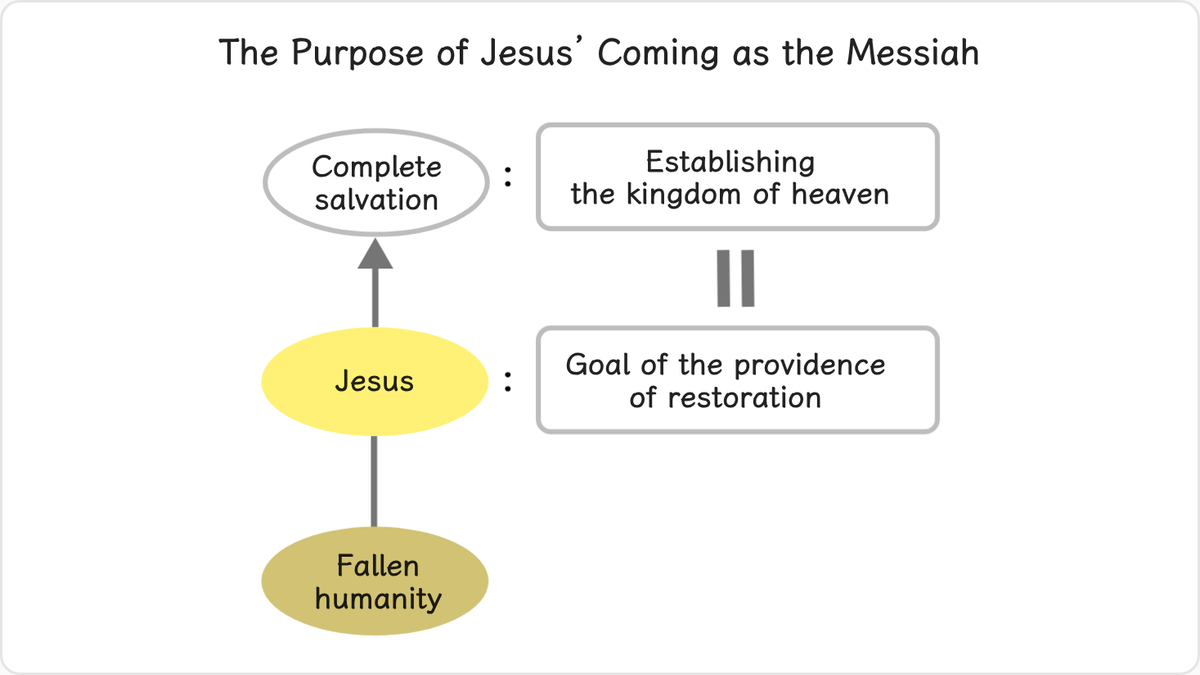
- Jesus came as the Messiah for nothing less than the complete salvation of humanity; he was to fulfill the goal of the providence of restoration.
- Jesus was supposed to establish the Kingdom of Heaven, first on the earth.
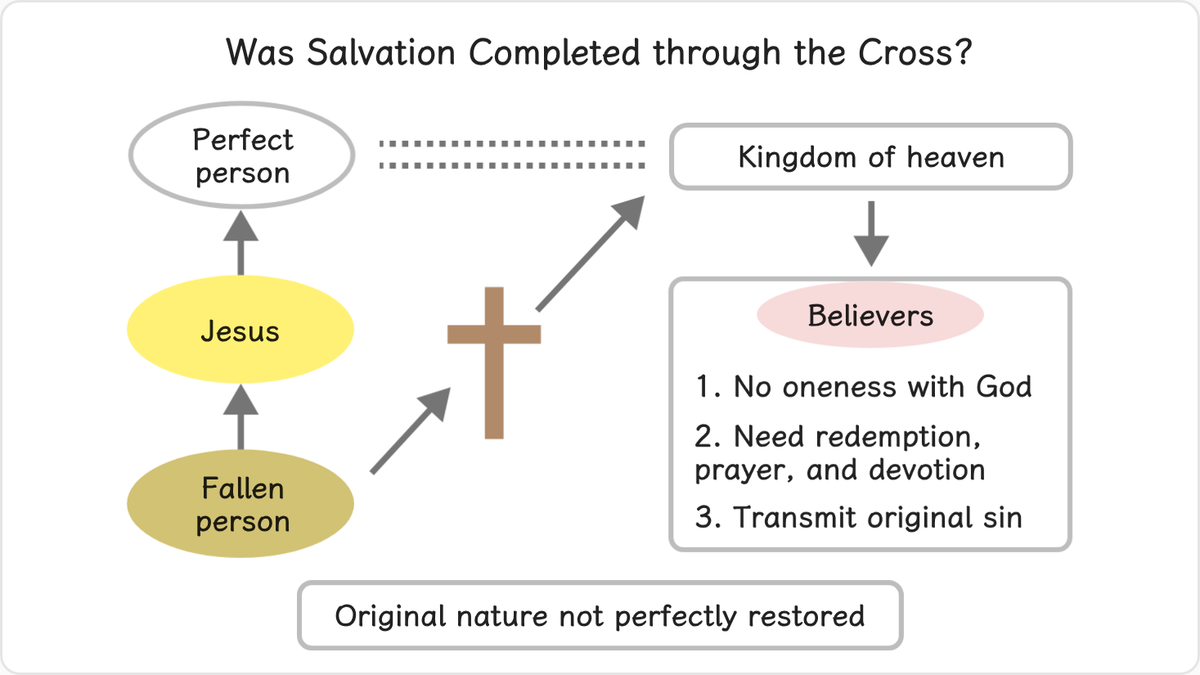
- Did Jesus’ crucifixion, which brought us redemption from our sins, fulfill the purpose of the providence of restoration?
- If so, we would expect that faithful believers in Jesus would have restored their original nature and built the Kingdom of Heaven on earth.
- Yet in the entire history of Christianity, there has been no one, no matter how devout, who lived his life in inseparable oneness with God.
- There has never been a believer who had no need of redemption or a life of ardent prayer and devotion.
- Moreover, no Christian parent, no matter how devout, has ever given birth to a child without the original sin.
- Christian parents continue to transmit the original sin to their children.
- This teaches us that the grace of redemption by the cross has neither fully uprooted our original sin nor perfectly restored our original nature.

- Considering the words and deeds of the disciples,
- God’s providence,
- and the words and deeds of Jesus himself, we conclude that
- Jesus’ death on the cross was not the most desired Will of God.
- Within a few generations after Jesus died on the cross, the people of Israel would be scattered over the face of the earth, suffering oppression and persecution.
- Moreover, not only the Jews, but also many faithful Christians have shouldered the cross as their portion for the collective sin of having killed Jesus.
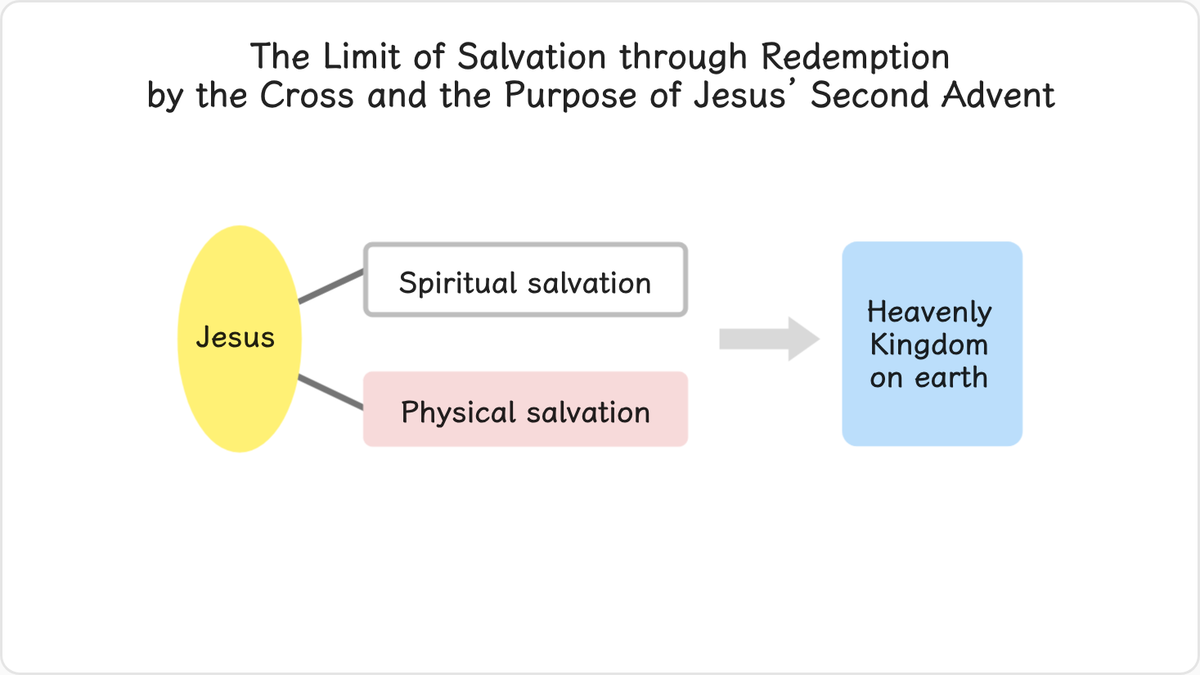
- What would have happened if Jesus had not been crucified?
- Jesus would have accomplished both the spiritual and physical aspects of salvation.
- He surely would have established the everlasting and indestructible Kingdom of Heaven on earth.
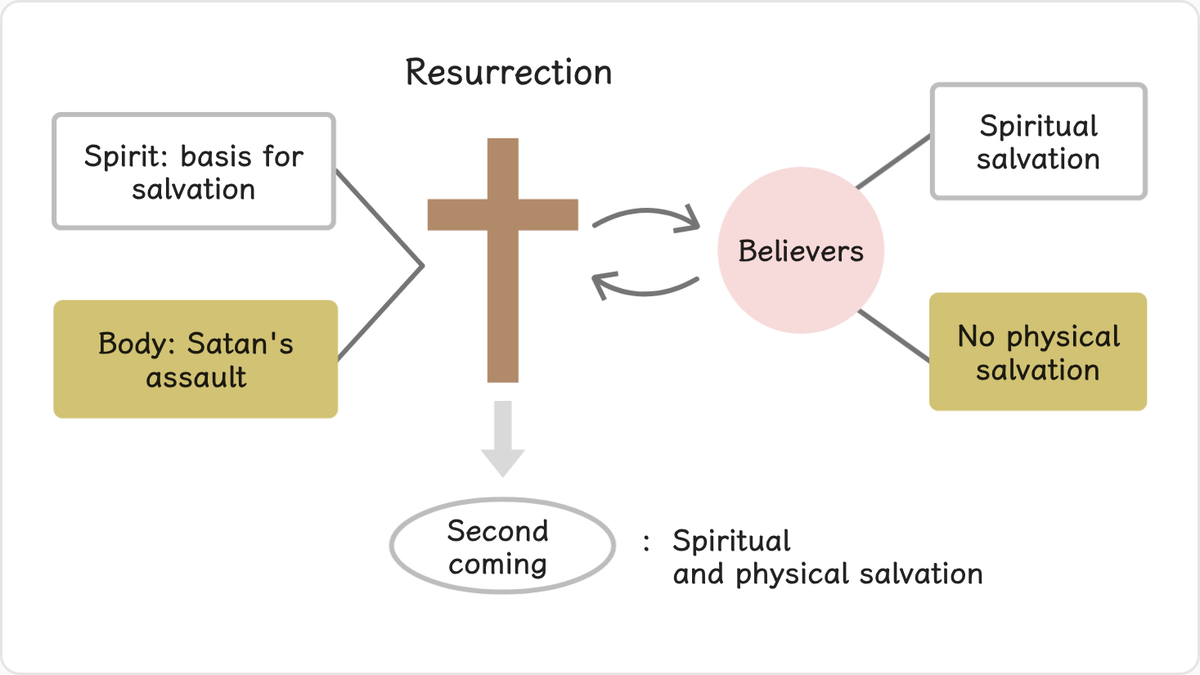
- However, Jesus laid the basis for spiritual salvation by securing the victorious foundation for his resurrection,
- through the redemption by his blood on the cross.
- As a result, all believers since his resurrection have received the benefit of spiritual salvation, but not physical salvation.
- To complete the work of spiritual and physical salvation, Jesus must come again on earth.
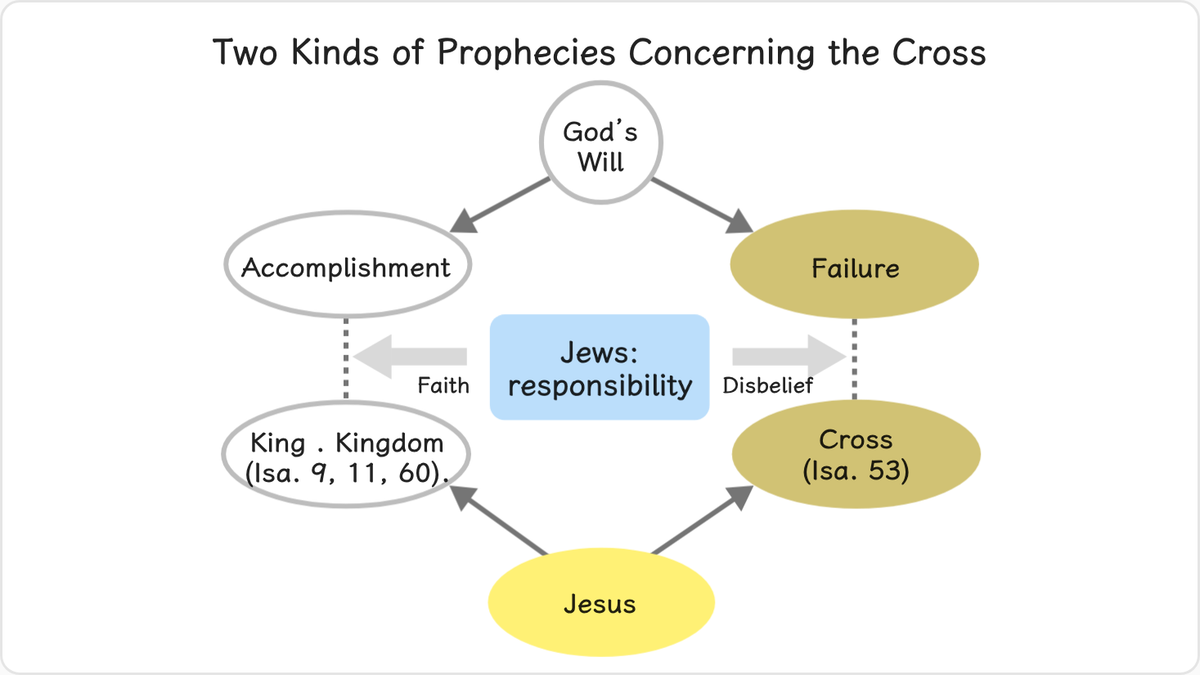
- We may think that the Bible contains only prophecies which foretold Jesus’ suffering. However, when we read the Bible anew with knowledge of the Principle, we realize there are other prophecies to the contrary.
- As Isaiah prophesied (Isa. 9, Isa.11, Isa.60) and as the angel announced to Mary, (Luke 1:31-33) it was foretold that Jesus would become the king of the Jews in his lifetime and establish an everlasting kingdom on the earth.
- Let us investigate why God gave two contrasting kinds of prophecies concerning Jesus.
- Human beings have their own portion of responsibility.
- They can either fulfill it in accordance with God’s Will or fail to fulfill it contrary to His Will.
- The nature of the fruits they bear depends upon whether or not they fulfill their portion of responsibility.
- For this reason, God gave two kinds of prophecies concerning the accomplishment of His Will.
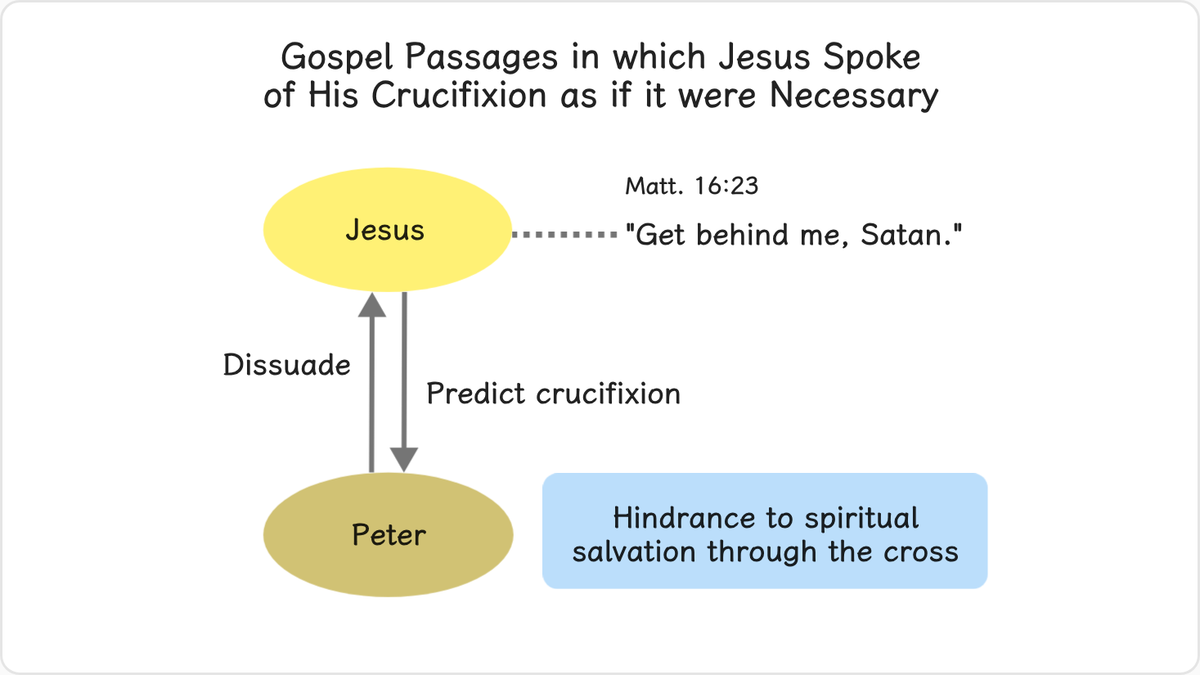
- For example, when Peter heard Jesus’ prediction of his imminent crucifixion and tried to dissuade him, Jesus rebuked him, saying, “Get behind me, Satan!” (Matt. 16:23).
- By that time, the disbelief of the chosen people had already frustrated Jesus’ efforts to complete the providence of salvation both physically and spiritually.
- And thus, Jesus had resolutely determined to accept the fate of the cross (Luke 9:31) as a condition of indemnity to open the way for at least the spiritual salvation of humankind.
- Peter’s dissuasion could have hindered Jesus from paving the way for spiritual salvation through the cross. For this reason, Jesus rebuked him.
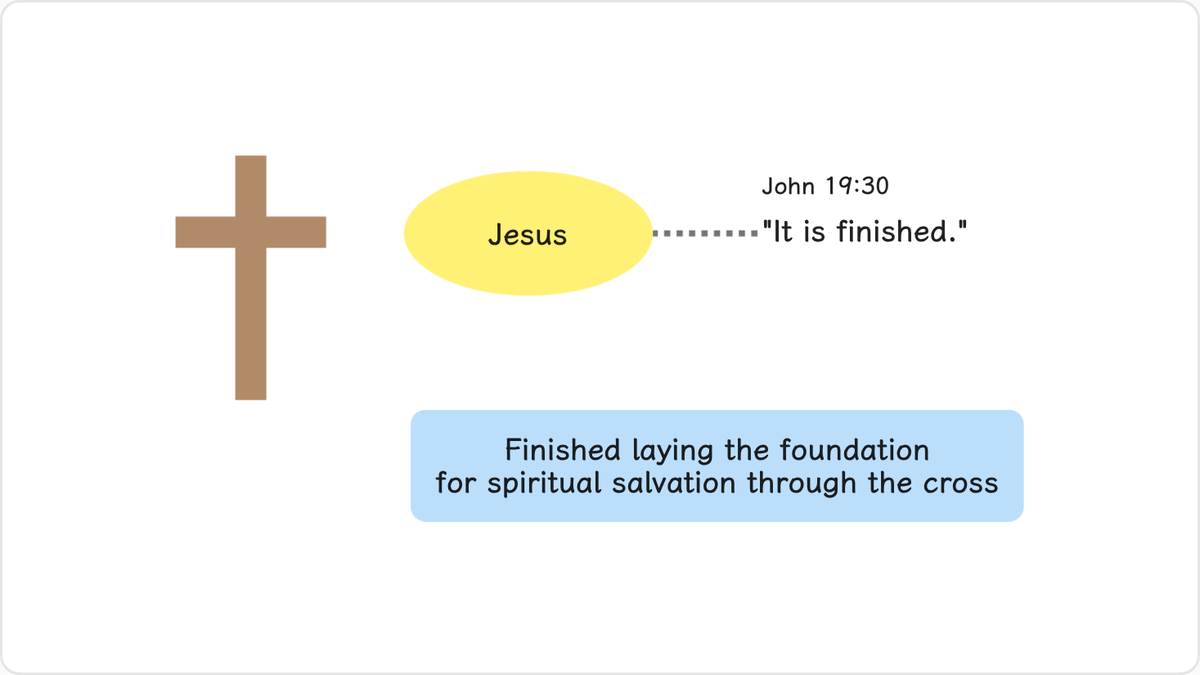
- A second example is Jesus’ last words on the cross, “It is finished” (John 19:30).
- Jesus did not utter these words to mean that through the crucifixion he had completely accomplished the providence of salvation.
- After he realized that the people’s disbelief was unalterable, he chose the path of the cross in order to lay the foundation for spiritual salvation, leaving unfulfilled the task of achieving physical salvation until the time of the Second Advent.
- By the words, “It is finished,” Jesus meant that he had finished laying the foundation for spiritual salvation. By this time, it had become the alternative goal of the providence.
The Second Coming of Elijah and John the Baptist
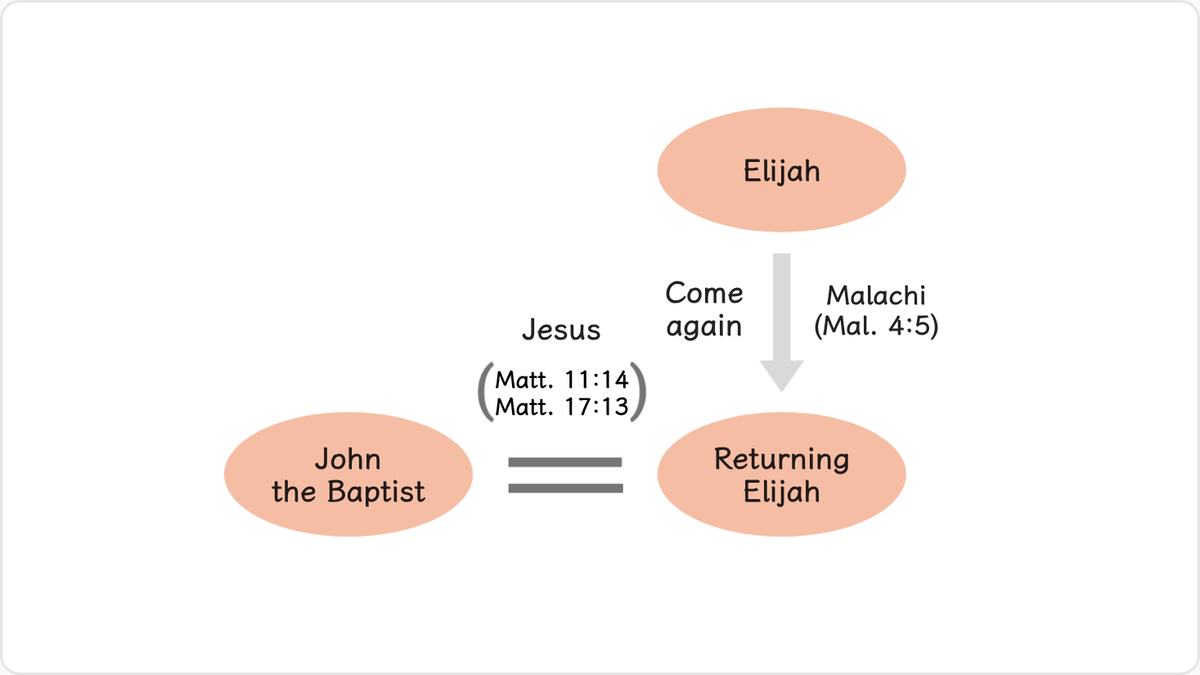
- The prophet Malachi foretold that Elijah would come again before the Messiah.
- Jesus testified that the prophesied coming of Elijah was realized in none other than John the Baptist.
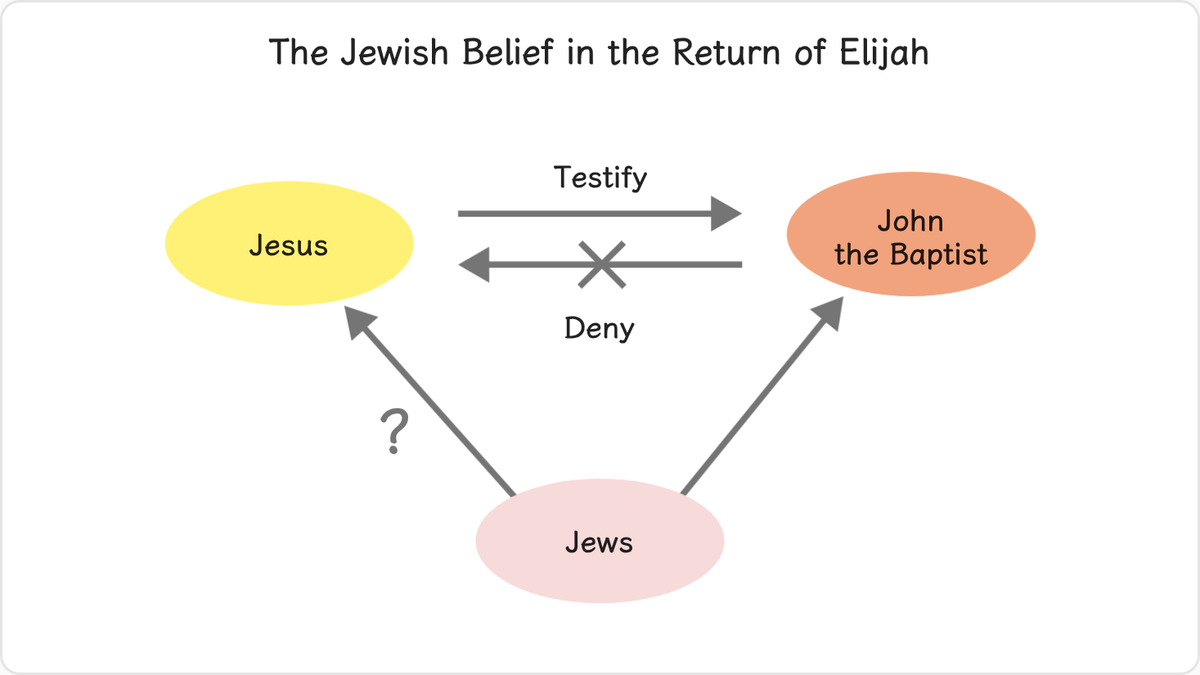
- Since the disciples already believed that Jesus was the Messiah, they willingly accepted his testimony that John the Baptist was Elijah.
- Yet how could other Jews who did not know Jesus accept this controversial claim?

- Jesus testified that John the Baptist was the very Elijah.
- On the contrary, John the Baptist himself flatly negated this claim.
- At that time, the Jewish people believed John the Baptist more than Jesus.
- Thus, they considered Jesus’ words to be a fabrication concocted to support his dubious claim to be the Messiah.
- Consequently, Jesus was condemned as an impostor.
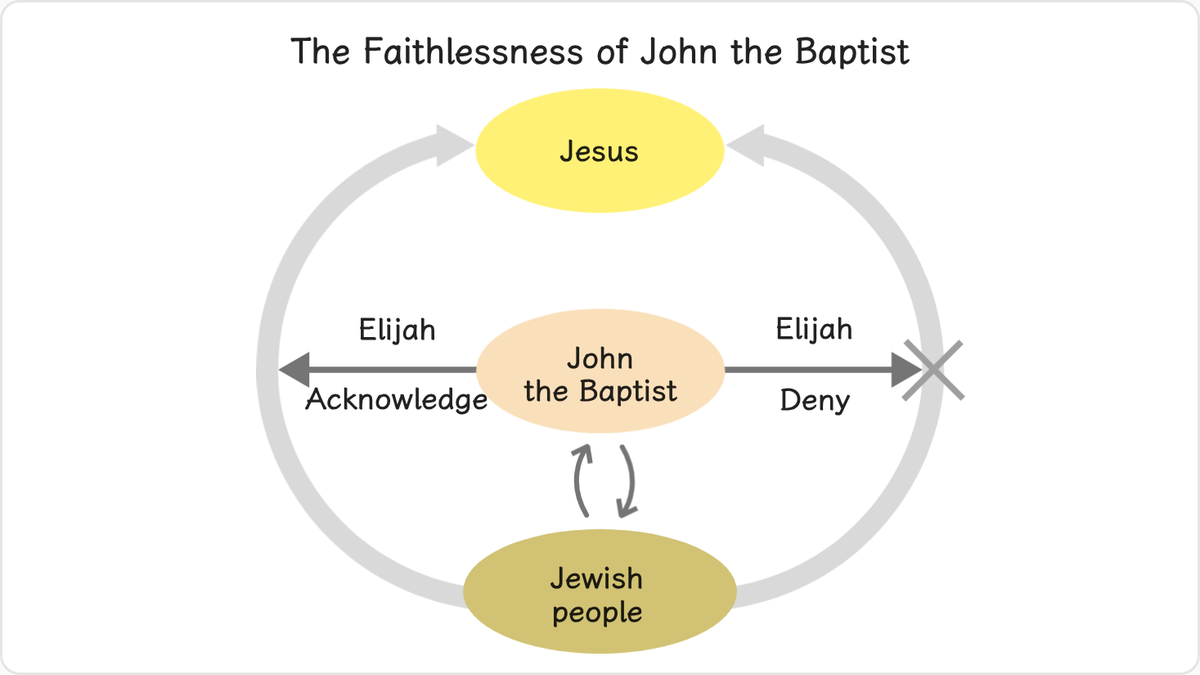
- Many among the Jewish leadership and people of Jesus’ day had the highest respect for John the Baptist.
- Some even thought of him as the Messiah.
- Had John the Baptist announced that he was Elijah, as Jesus had testified, those who were eagerly waiting for the Messiah would have readily believed John’s testimony and flocked to Jesus.
- Instead, John’s ignorance of God’s providence, which led him to insist that he was not Elijah, became the principal reason why the Jewish people did not come to Jesus.
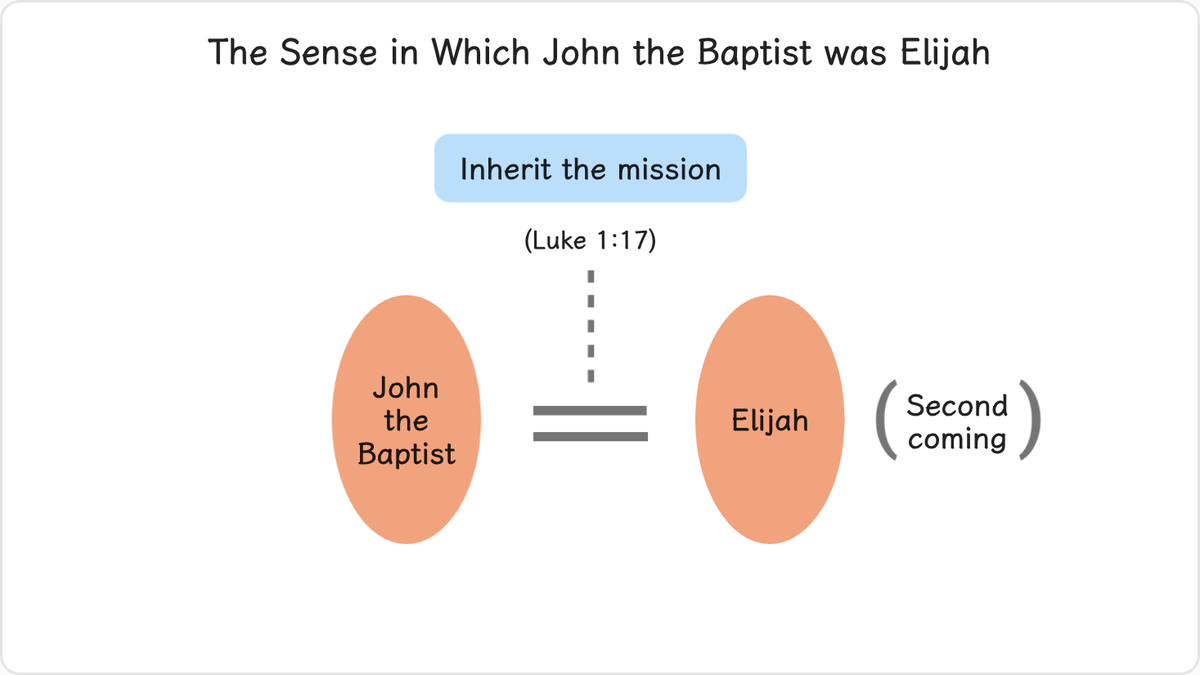
- John the Baptist was to inherit and complete the mission which Elijah had left unfinished on earth.
- As recorded in the Bible, he was born with the mission to go before the Lord,
- “in the spirit and power of Elijah, to turn the hearts of the fathers to the children, and the disobedient to the wisdom of the just, to make ready for the Lord a people prepared” (Luke 1:17).
- Hence, in terms of his mission, John was the second coming of Elijah.
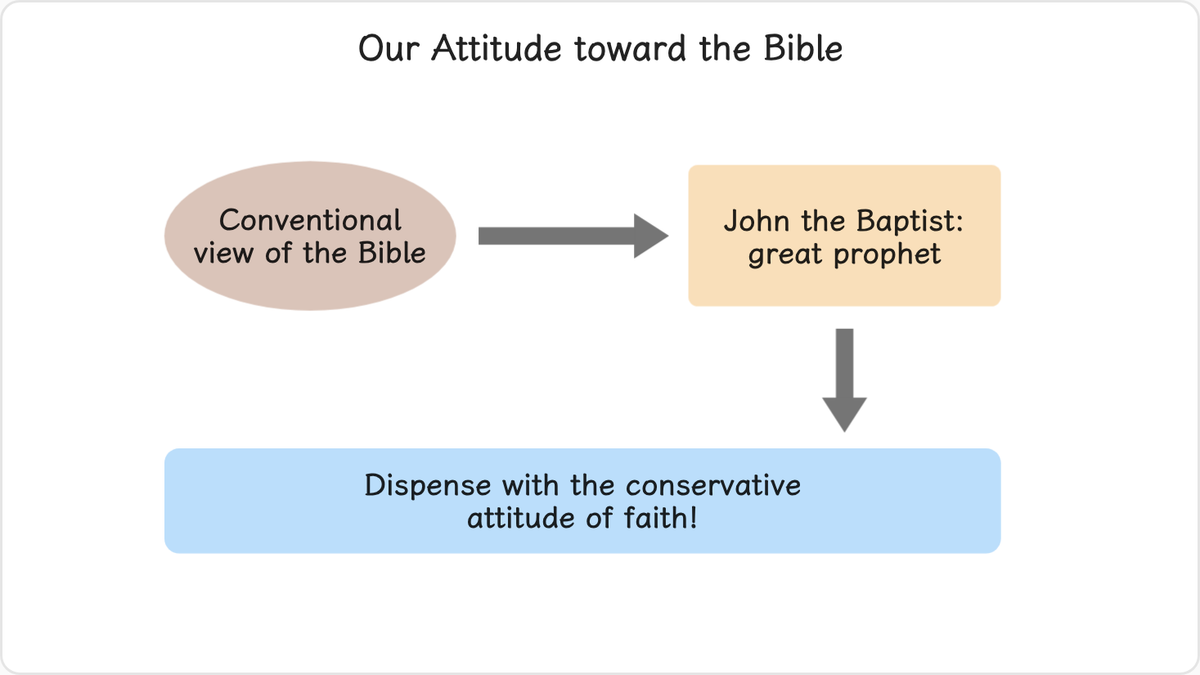
- Until today, no one has ever uncovered this heavenly secret of John the Baptist’s failure,
- because we have been reading the Bible based on the unquestioned belief that John the Baptist was a great prophet.
- We should dispense with the conservative attitude of faith which makes us afraid to question conventional beliefs and traditional doctrines.